
Cell towers and antennas help you connect to the internet, make phone calls, and send texts. These towers are tall structures you see around the city.
Small cells are much smaller, about the size of a home Wi-Fi router. They are often attached to streetlights, traffic signals, or the sides of buildings. Because they cover a small area, many small cells are needed to match the coverage of one large tower. They are important for 5G service, which needs more antennas to deliver faster speeds and better connections in busy areas.
Small cells work alongside larger towers to improve coverage, add capacity, and support new wireless services.
The City of Winnipeg does not control or regulate cell towers or antennas. These systems must follow national safety rules. Health Canada sets the safety guidelines in a document called Safety Code 6, and Innovation, Science and Economic Development Canada (ISED) makes sure companies follow them. Any company using 5G or small cell technology in Winnipeg must meet these federal safety standards.
City review process for antennas and towers
The City reviews proposals for antennas or towers that are 15 m or taller. We also review shorter towers if they are used by major telecom or broadcasting companies, or if the tower is leased to another company.
If you want to construct an antenna system in Winnipeg, see the Communication Facility Proposal Review form (PDF, 151KB).
The City's role
The City developed the Winnipeg Antenna System Policy (PDF, 856KB) to seek input on antenna and tower locations. The policy aligns with the federal licensing process, regulated by Innovation Science and Economic Development Canada (ISED).
The Government of Canada is in charge of all types of cellular technology, including antennas and small cells. In Winnipeg, the City provides feedback on where these systems can go, what they should look like, and how the public is involved in the process. The federal government is the ultimate approval authority for cellular technology.
The image below shows common places where antennas and small cells might be installed. It also explains what role the City plays in each situation.
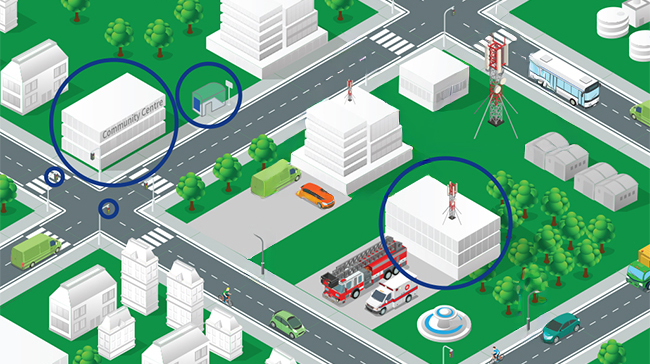
City-owned assets
Towers or small cells on/in City-owned land or buildings
City role
- City lease agreement in/on buildings
- Permits on rights-of-way
- Letter of agreement from the City on land, buildings or structures conforming with the Winnipeg Antenna Systems Policy
Examples
- City-owned land and buildings
- City-owned poles (e.g., ornamental street lights)
- Transit shelters
- Traffic signal poles
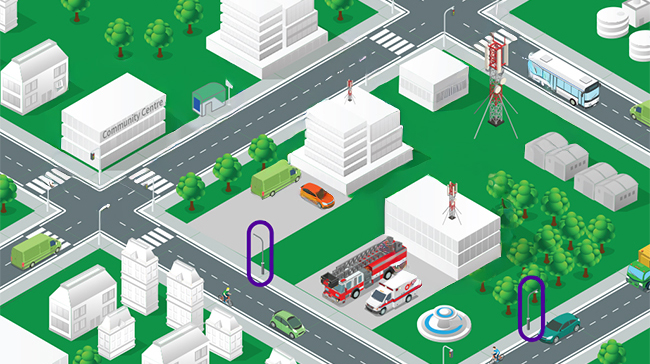
Manitoba Hydro infrastructure
Freestanding towers and antennas or small cells may be installed on Manitoba Hydro infrastructure through lease agreements with Manitoba Hydro. These installations are allowed under the City’s Encroachment By-law and do not require City approval.
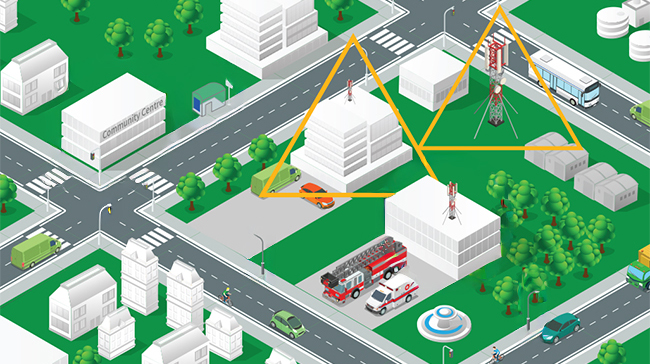
Privately owned lands/buildings
Exempt locations
Locations where antenna system proposal review and public consultation is exempted by the Winnipeg Antenna System Policy.
City role
- No role
Examples
- Inside buildings
- Where the antenna installation does not increase the height of the structure by more than 25 percent
- Freestanding towers less than 15 m in height (e.g., amateur radio towers)
- An increase in height to an existing freestanding tower no greater than 25 percent of initial height
- Temporary antenna systems
- Maintenance, minor modification, and relocation within the same site
Private sites
Lease agreements with individual property owners for sites available on the open real estate market.
City role
- Provide a recommendation to ISED for proposed antenna systems
Examples
- Freestanding towers
- Some rooftop antenna installations
- Some antenna attached to buildings
Some wireless companies are testing 5G small cells in Winnipeg. These trials don’t always need City approval. In other Canadian cities, 5G small cells are already in use. It will take time for 5G to reach full speed and performance as new technology is added.
Antennas need to be close to where people use wireless services. Radio signals don’t travel far, so more antennas are needed to keep up with demand. This means antennas may be placed in residential areas to provide strong and reliable service. A growing demand means more antennas are needed in both new and old neighbourhoods.
The federal government outlines the rules for antenna systems, including how land use and public engagement are handled. These rules are explained in ISED’s document: Radiocommunication and Broadcasting Antenna Systems – Client Procedures Circular.
ISED requires antenna system companies to use existing towers wherever possible. In some instances, because of technical or other constraints, sharing a structure is not always an option. For example, the size of the area to be covered, or the specific technical requirements for the proposed tower may make it impossible to share an existing tower.
Health Canada sets safety rules for radio signals in a guide called Safety Code 6 publication. ISED uses this guide to make sure all wireless companies follow the rules. Companies must always meet these safety standards, even when there are other antennas nearby. They must also follow any updates to the safety rules. As Health Canada regulates the safety standards for wireless equipment, the City does not consider safety concerns when reviewing a proposal.
In 2020, the City reviewed small cell technology to better understand its benefits, challenges, and how it fits with 5G. We asked for feedback from residents and organizations. The review included:
- Internal reviews
- Public input
- Discussions with other governments and service providers
The review helped us test our processes and see if any changes were needed. We also learned that the City has limited control over where small cells can be placed.
Questions?
For questions about small cell installations on City property, contact 311
For questions about a specific small cell installation or its safety, contact the wireless provider or reach out to the ISED Manitoba District Office:
ic.spectrumwinnipeg-winnipegspectre.ic@canada.ca or 1-800-665-3421
For questions about the safety rules in Safety Code 6, contact Health Canada:
info@hc-sc.gc.ca or 1-866-225-0709