
When families think about back-to-school safety, familiar reminders often come to mind: slow down in school zones, watch for children crossing the street and help students travel safely to and from school.
But as young people spend more of their lives online, their safety in virtual spaces deserves just as much attention.
The beginning of a new school year offers parents and caregivers a natural opportunity to revisit online habits, privacy settings and the information children (and adults) share online.
That conversation was the focus of a recent interview on CBC Information Radio featuring P/Sgt. Jennifer Zaretski, S/Sgt. Shaun Venn and Willow, the Service’s electronic storage device detection dog and online safety ambassador.
The interview began with a familiar back-to-school tradition: photographs of children posing with backpacks or signs displaying their grade, school and other personal details.
Zaretski, one of two patrol sergeants assigned to the School Engagement Section, said families do not necessarily need to stop sharing those moments. They should, however, consider who can see the images and how much information they reveal.
“Mostly, just be careful about how much information you’re putting online,” Zaretski said. “Depending, of course, on your privacy settings, it may go out to just friends and family. But if you have an open account, then anybody can see everything.”
Parents should avoid sharing details such as a child’s date of birth, home address or school. They should also look closely at the background of a photograph for house numbers, street signs, school logos or other details that could reveal a child’s location or routine.
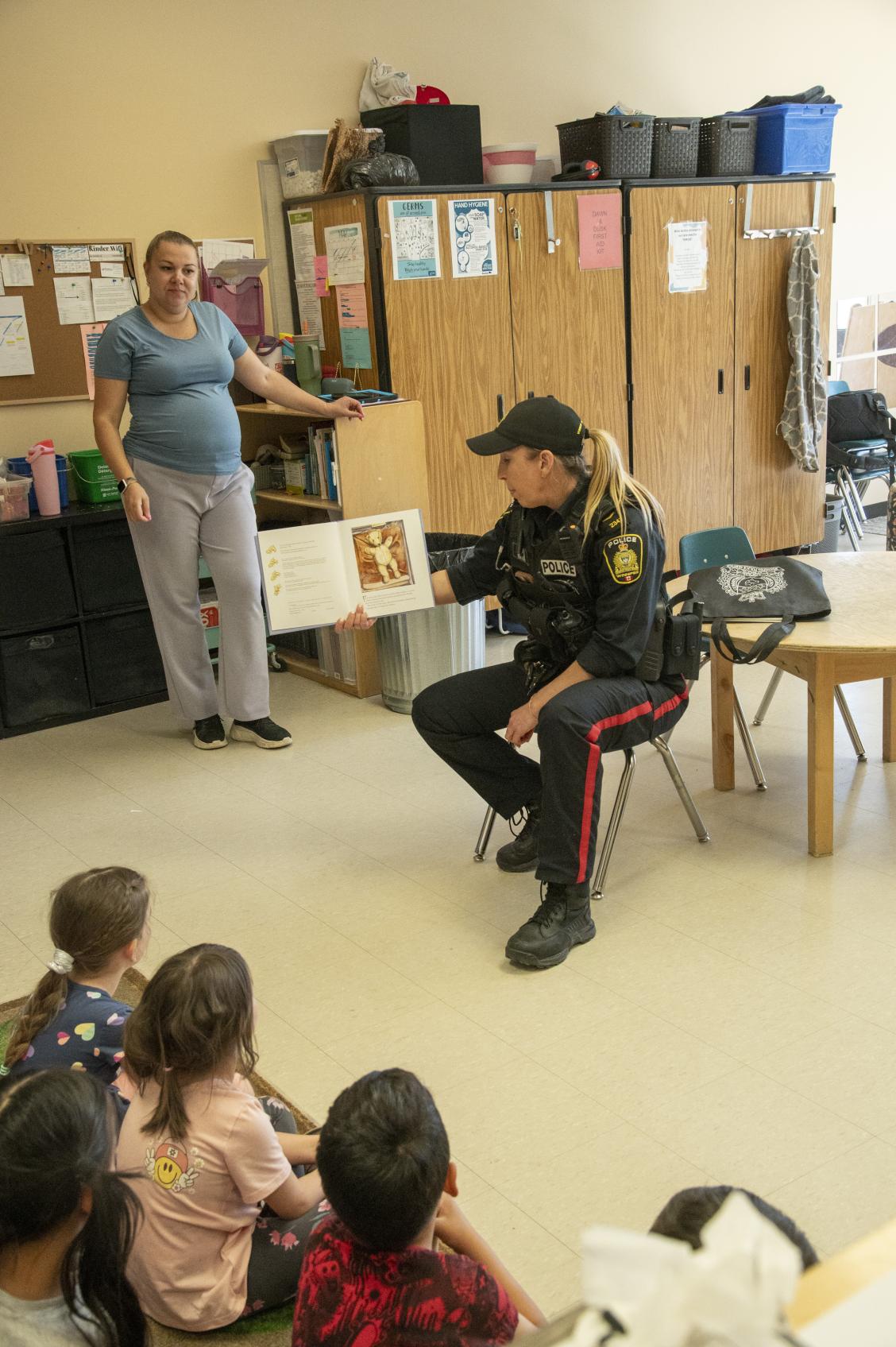
New technology creates new risks
The risks associated with sharing photographs have also evolved.
Artificial intelligence can be a useful tool, but it can also be misused to alter an ordinary photograph and create a convincing fake image. This includes “nudify” applications and other tools that can generate sexualized images without the knowledge or consent of the person depicted.
“Technology is great until it’s not,” Zaretski said.
Zaretski recently completed a six-year assignment with the Internet Child Exploitation Unit. She said police are receiving increasing reports involving altered images. When a child’s image is manipulated in this way, the result may also constitute illegal child sexual abuse material.
The concern extends well beyond first-day-of-school photographs. Any image shared publicly, or distributed privately and subsequently reshared, can potentially be copied, manipulated or used in ways never intended by the person who posted it.
Make online safety part of the family conversation
Venn, who oversees the Community Relations Division, said the growing amount of time children spend online makes it important for parents and caregivers to understand the environments they are entering.
“Children are spending more and more time in the virtual space,” Venn said. “We want parents to be aware of some of the risks that are out there.”
The Winnipeg Police Service developed Safeguarding Our Youth Online, an online safety presentation designed for parents, caregivers and others who support young people. The presentation can be delivered virtually or in person and provides information about emerging online risks and ways adults can help children navigate them.
Online safety conversations should be appropriate to a child’s age, but they are important whether a student is entering elementary, middle or high school.
Parents and caregivers are encouraged to:
- Understand which games, apps and social-media platforms their children use.
- Review account privacy and location-sharing settings together.
- Talk about what personal information should never be posted or shared.
- Remind children that people online may not be who they claim to be.
- Encourage children to speak with a trusted adult if an interaction, request or image makes them uncomfortable.
- Keep the conversation open and ongoing instead of waiting for a problem to occur.
“It really does come down to being engaged,” Venn said. “Be aware of what your children are doing, be aware of their online spaces and what they’re doing in that environment, and have those conversations with them.”
Willow helps open the conversation
Willow also plays an important role in both investigations and education.
The three-year-old black Labrador is trained to locate electronic storage devices that may contain evidence, including cellphones, laptops, USB drives and memory cards. During searches, she has located devices hidden in places officers might otherwise have needed considerable time to find, including a cellphone concealed in a toilet and a laptop buried among rows of storage containers.
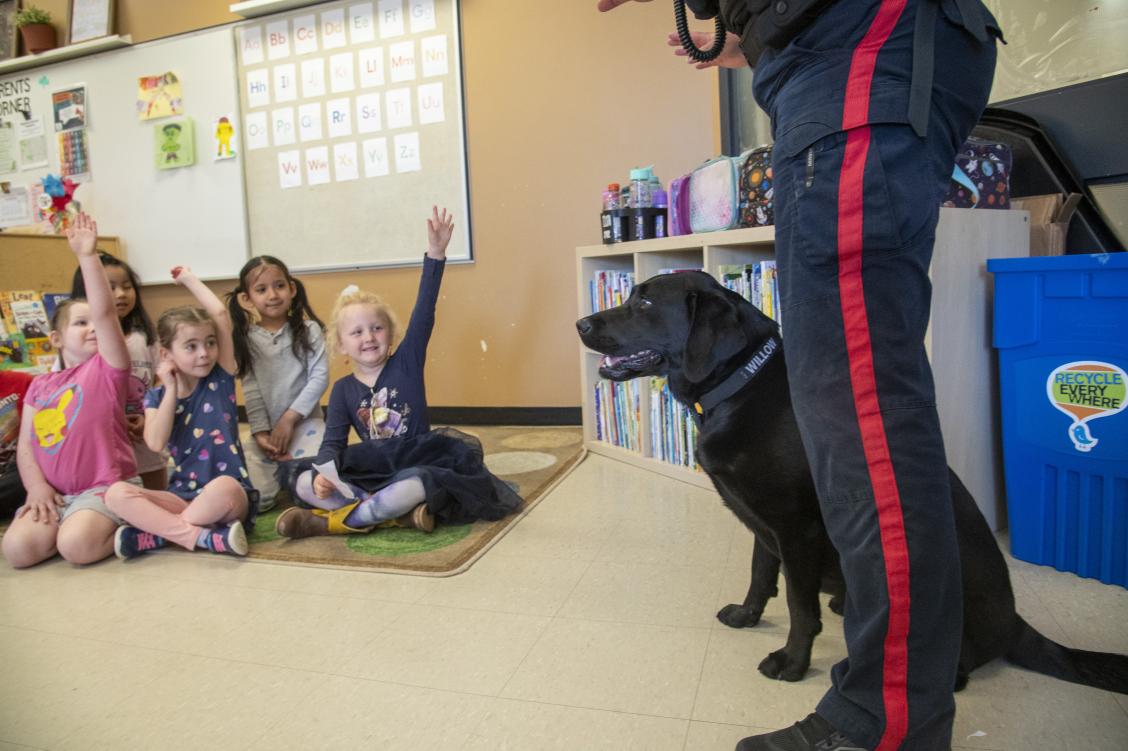
Willow also accompanies officers delivering online safety presentations in schools.
“She’s a real relationship builder,” Zaretski said. “That’s what we try to do when we go into schools … create a community where kids feel safe approaching police officers.”
That connection can help begin a serious conversation in an approachable way.
As students settle into another school year, families are encouraged to think about safety wherever young people spend their time. That includes classrooms, playgrounds, sidewalks and school zones, but it also includes group chats, gaming platforms, social media and every other place they gather online.
To learn more about Safeguarding Our Youth Online or request a presentation, visit our presentations page.
You can learn more about Willow here.
Listen to the complete audio version of the CBC interview.