A two-year interprovincial organized crime investigation that resulted in the largest illicit drug seizure in Manitoba history is also being recognized as a powerful example of what can be achieved through sustained collaboration between law enforcement agencies across Canada.
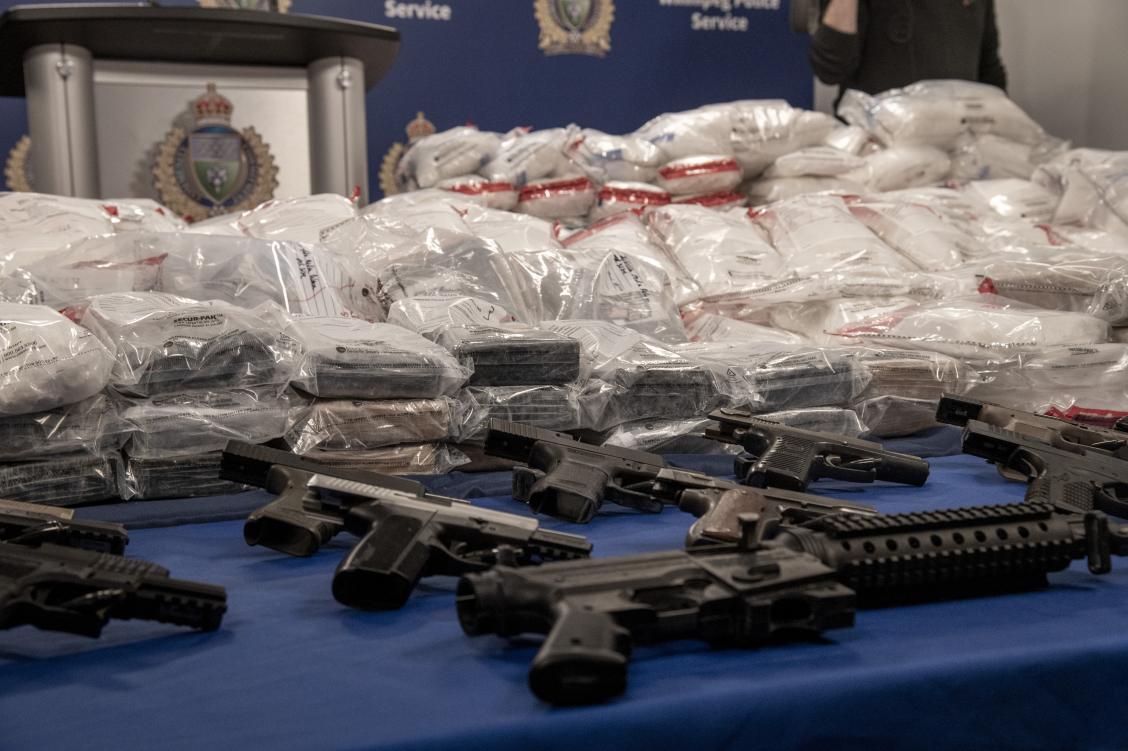
Project Puma, led by the Winnipeg Police Service Organized Crime Unit with support from numerous policing and intelligence partners, resulted in 33 arrests and the seizure of more than $37.2 million worth of illicit drugs, including methamphetamine, cocaine, and fentanyl. Investigators also seized firearms, vehicles, illegal cigarettes, and approximately $825,000 in currency.
But beyond the seizures and arrests, speakers at the May 20 media conference emphasized the broader impact organized crime and illicit drugs continue to have on communities across Manitoba and Canada.
“We see the crippling impact of the drug trade on a daily basis,” Deputy Chief Cam Mackid, Investigative Services, of the Winnipeg Police Service said during the media conference. “We see the impact on individuals in form of addictions, suicides, overdoses. And we see devastation brought upon the families and those struggling with addictions.”
“We see neighborhoods living in fear because they have the misfortune of living within the blast radius of the drug house down the street. These people are forced to deal with the very real potential for violence that accompanies drug trafficking, and they often suffer through the secondary crime and disorder that comes with it as well.”
Inspector Josh Ewatski of the Winnipeg Police Service Organized Crime Division said illicit drug trafficking continues to contribute to violence, addiction, and harm in communities across the country.
“The widespread availability of illicit drugs such as cocaine, methamphetamine, and fentanyl in our communities has contributed to a growing addiction and overdose crisis in Winnipeg, across Manitoba, and throughout Canada,” Ewatski said.
“Every day, families and communities continue to experience the devastating impacts of these dangerous substances. As illicit drug trafficking increases, so too does the risk of firearms offences and violent incidents in our city.”
The investigation involved agencies from Manitoba, Ontario, and Alberta, including municipal police services, the RCMP, FINTRAC, the Ontario Provincial Police, and the Manitoba Criminal Intelligence Centre (MCIC).
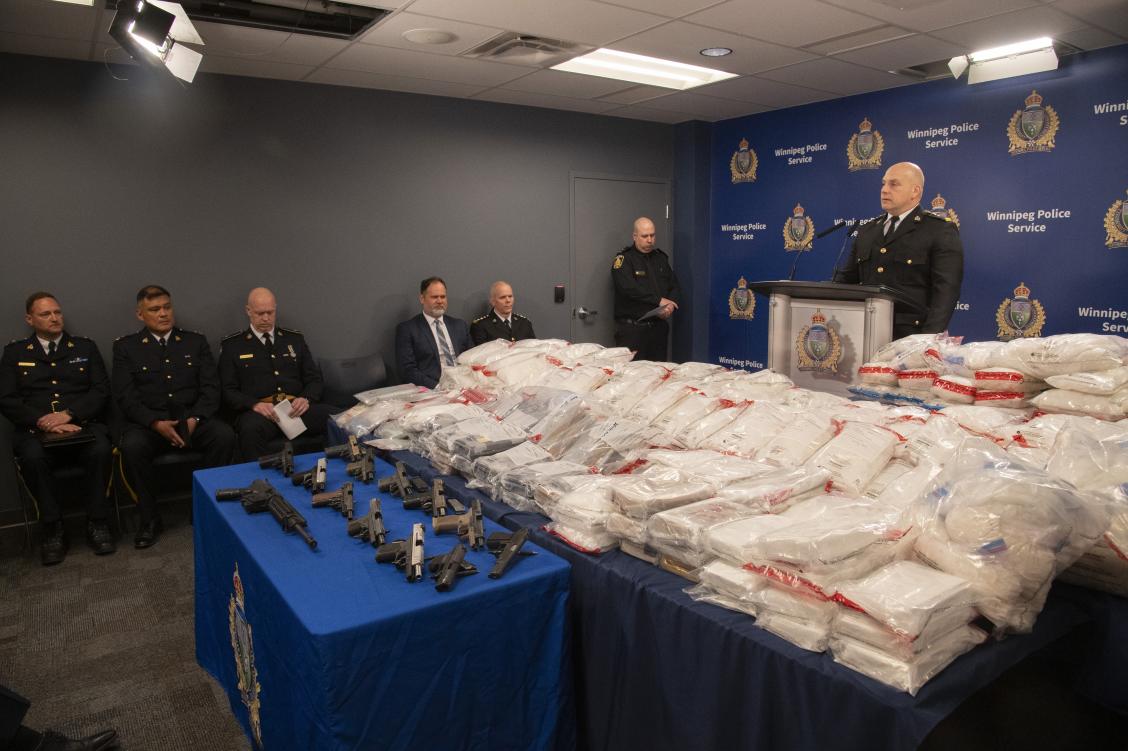
Throughout the media conference, officials repeatedly emphasized that investigations involving organized crime networks can no longer be approached by individual agencies working independently.
“Project Puma highlights the critical importance of collaboration among law enforcement agencies in combating drug trafficking and organized crime,” Ewatski said.
“Criminal networks no longer operate within silos; they collaborate with rivals, operate across jurisdictions, adapt quickly, and rely on complex supply chains, making it impossible for any single agency to effectively address the threat alone.”
Acting Detective Superintendent Eddie Bradford of the Ontario Provincial Police echoed those remarks during the media conference.
“Organized crime networks do not recognize provincial boundaries,” Bradford said. “As law enforcement, neither can we.”
Ewatski said the success of Project Puma was made possible through intelligence-sharing, joint investigations, and coordinated enforcement efforts involving municipal, provincial, federal, border, and international partners.
“Through intelligence sharing, joint investigations, and coordinated enforcement efforts, municipal, provincial, federal, border, and international partners can combine their expertise and resources to identify trafficking networks, target high-level offenders, and dismantle organized crime groups,” he said.
“This collaborative approach not only improves operational effectiveness and officer safety, but also helps reduce violence, disrupt the illicit drug trade, and protect vulnerable communities.”
Manitoba Justice Minister Matt Wiebe said the investigation demonstrated the importance of sustained investments in intelligence-led policing and interagency cooperation.
“The results of Project Puma are clear, and the evidence of what can be achieved when law enforcement agencies and governments work together in true partnership,” Wiebe said during the conference.
Speakers also acknowledged the significant commitment required from investigators and professional staff throughout the lengthy investigation.
“This investigation demanded patience, sacrifice, and an extraordinary level of teamwork, and they never lost sight of the importance of protecting our communities,” Ewatski said.
“Their efforts and commitment to public safety will have a lasting and meaningful impact on the people we serve.”
The Deputy Chief also acknowledged the dedication of investigators involved in organized crime enforcement.
“We often hear in law enforcement that the key to maintaining your personal health and wellbeing depends on one’s ability to not take the work personally,” he said.
“I can tell you the men and women in our Service who work on drug investigations do not subscribe to that philosophy. They take their work very personally, because quite frankly they know what’s at stake. They do an incredible job, and they’re very effective.”
Inspector Henry Tilo, RCMP Combined Forces Special Enforcement Unit (CFSEU) in Toronto said the investigation should serve as a reminder of the importance of coordinated policing efforts across Canada.
“Let this operation stand as a powerful reminder,” Hendo said. “When law enforcement agencies unite across jurisdictions, we amplify our strength and safeguard our communities with greater precision and impact.”
Project Puma – Manitoba’s Largest Drug Seizure
Evidence Seized:
- 339 kilograms of methamphetamine
- 175 kilograms of cocaine
- 11.25 kilograms of fentanyl
- Approximately $825,000 in cash
- 14 firearms, including 12 handguns, one carbine rifle, and one shotgun
- Seven vehicles (4 modified for concealment purposes – Trap Vehicles)
- 1.35 million illicit cigarettes
- Additional quantities of pills, cannabis, and cannabis derivatives
Unified in the fight against illicit drugs in our communities
The two-year Project Puma investigation brought together law enforcement agencies from Ontario, Manitoba, and Alberta.
This interprovincial effort, led by the Winnipeg Police Service, included collaboration with the following partners:
- Manitoba Criminal Intelligence Centre (MCIC)
- Financial Transactions and Reports Analysis Centre of Canada (FINTRAC)
- Parkland Royal Canadian Mounted Police (RCMP – Alberta)
- Edmonton Police Service (EPS)
- Combined Forces Special Enforcement Unit (Toronto)
- Guns and Gangs Unit (Winnipeg Police Service)
- Winkler Police Service
- Brandon Police Service
- Ontario Provincial Police (OPP – Paris, Ontario and Northwest Region)
- Morden Police Service
- Ontario Provincial Police Northwest Region
- Ontario Provincial Police Brant County
- Kenora Ontario Provincial Police Organized Crime Enforcement Bureau
- Winnipeg Police Service