Women are not asking for a place.
They’ve already earned one.
And now, many are helping the next generation decide whether this career is right for them.
Last week at Winnipeg Police Service headquarters, Inspector Andrea Scott stood in front of 40 women who had gathered for a two-day Women in Policing Career Workshop. Her message was honest and direct.
Policing, she told them, isn’t for everyone.
“But for the people who choose this path,” she said, “it can be one of the most rewarding careers you’ll ever have.”
Scott would know. Over a 25-year career with the Winnipeg Police Service, she has worked across the organization – from frontline patrol to specialized investigative units – most recently leading one of the Service’s most demanding divisions focused on protecting some of the most vulnerable members of the community.
Her path into policing, she told the group, was not unusual.
She didn’t grow up planning to become a police officer. Like many others, it was only after volunteering at a police service centre and joining officers on a ride-along that she realized the job offered something she hadn’t found elsewhere.
Every day was different. Every call mattered.
And the work was rooted in something deeper than enforcement. It was about people.
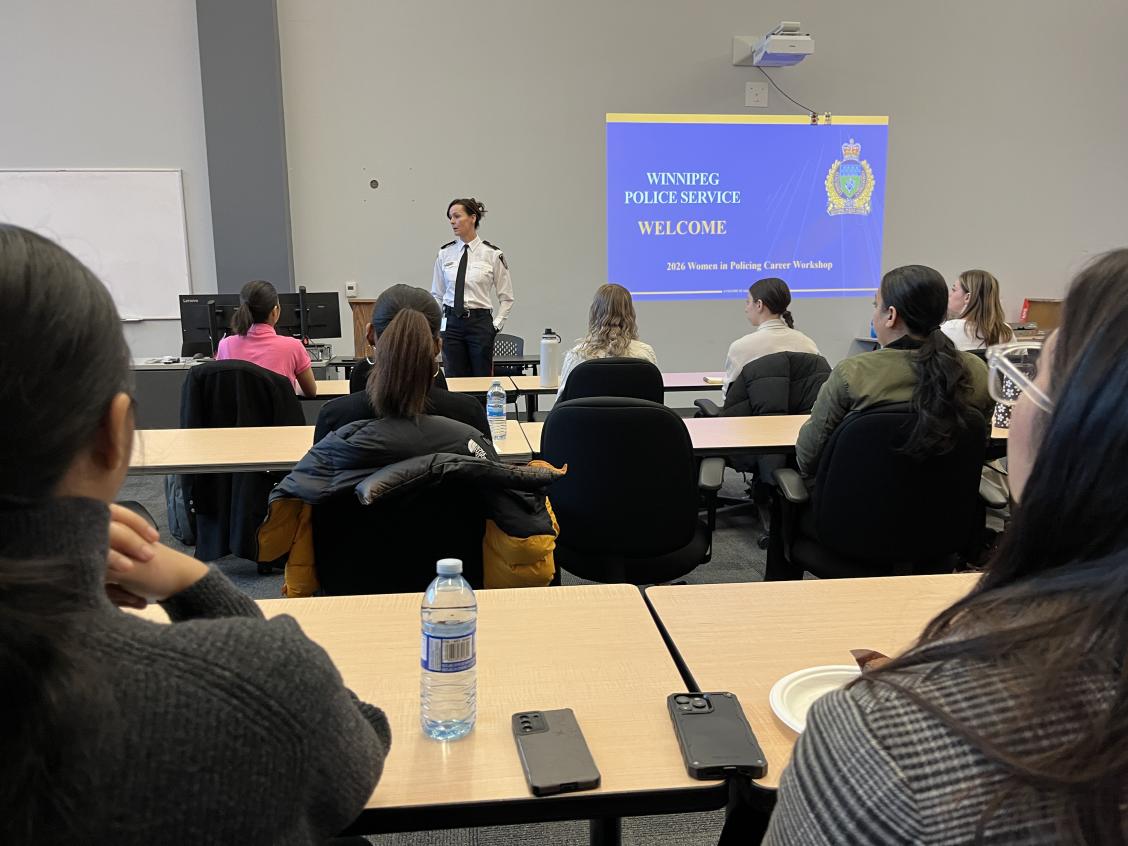
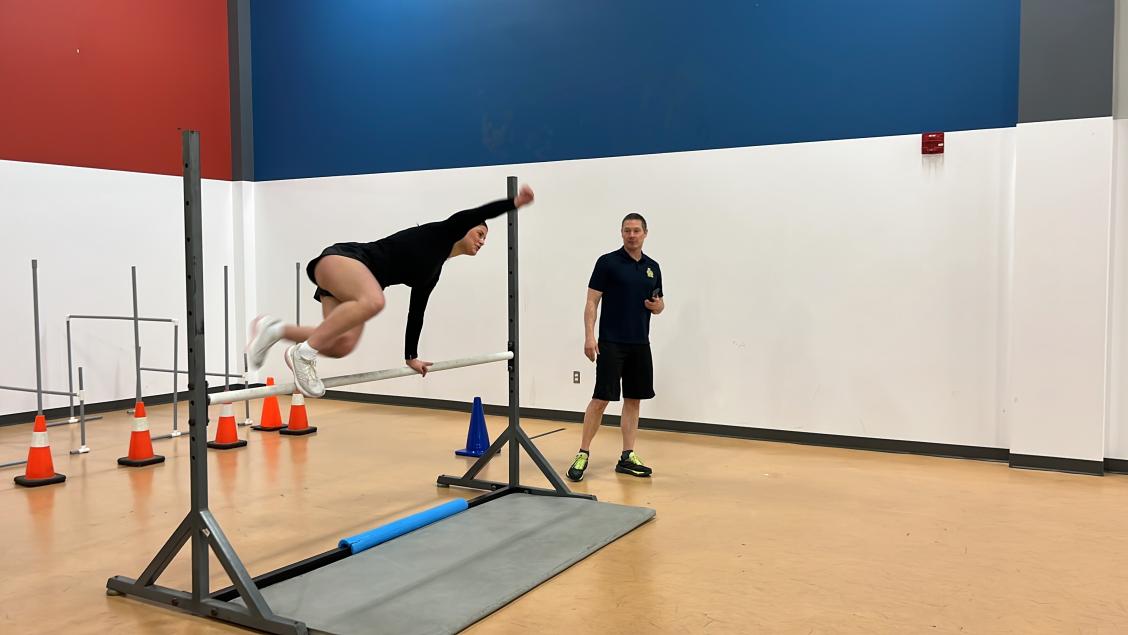
Over two days, participants in the workshop were given an inside look at what a career in policing really involves. They heard from officers, recruiters and civilian staff, experienced components of the physical fitness testing process, and learned about the wide range of roles that support modern policing.
For Scott, the goal was simple: be genuine about both the rewards and the realities of the profession.
Policing demands more than physical strength or academic credentials. It requires emotional resilience, teamwork and a deep commitment to serving others – even on the most difficult days.
“You have to be able to rely on the people beside you,” she explained. “This job is built on trust and teamwork. Your colleagues depend on you, and the community depends on you too.”
That sense of teamwork and shared responsibility was a common theme throughout the workshop.
Participants experienced portions of the fitness testing process, learned about life in general patrol, and heard from a range of units that make up the modern police service. They also met members of the Police Communications Centre – the call-takers and dispatchers who serve as a lifeline between the community and emergency services – as well as Central Processing Officers who manage the holding facility where prisoners are detained following arrest.
The Service’s Cadet Program was also highlighted. Recognized and modelled nationally, the program provides valuable experience for those considering a career in policing while also teaching skills that are valuable in many other professions.
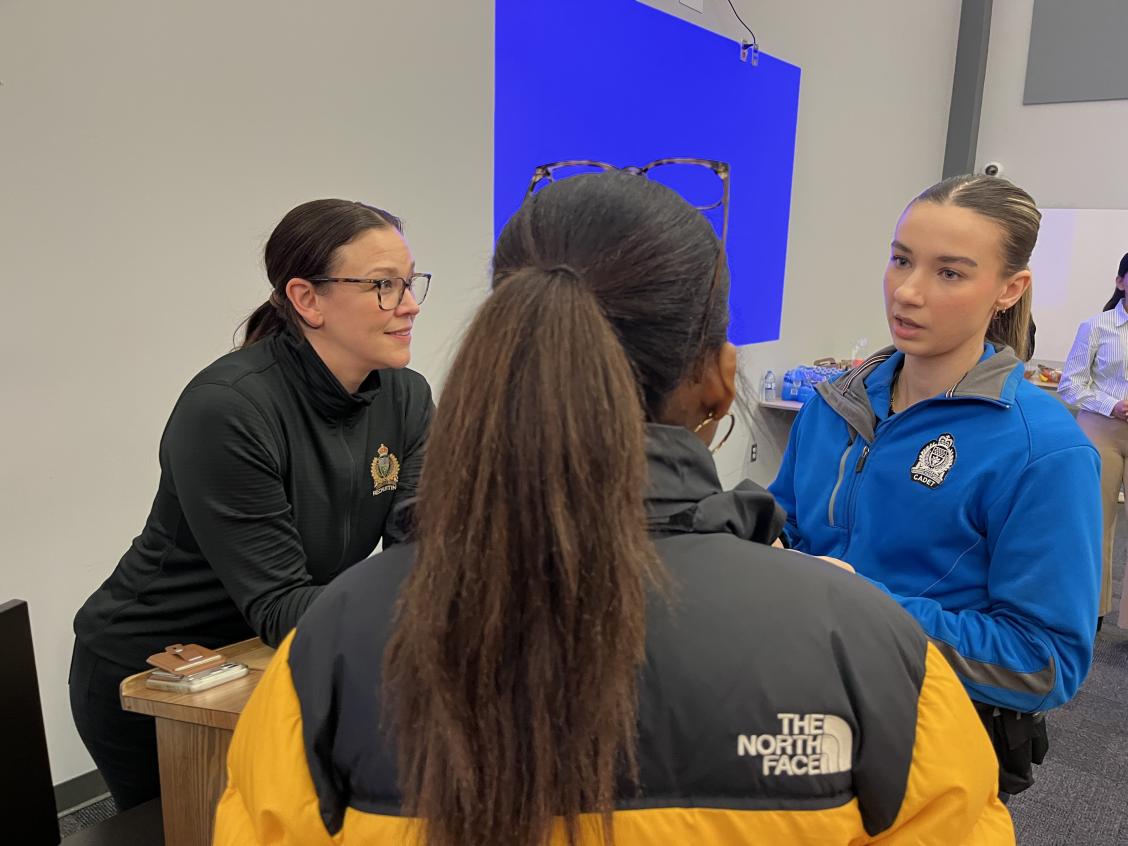
For Winnipeg Police Service recruiter Constable Jason Ulrich, the purpose of the workshop is not to promise careers. It is to provide insight.
He knows not every participant will eventually become a police officer.
The standards are high, and the recruiting process is intentionally demanding.
Days like this are meant to help prospective applicants understand the job, ask the questions they’ve always wanted to ask, and decide whether this is truly the path they want to pursue.
In many ways, it reflects the same curiosity and critical thinking that good investigators rely on every day.
Workshops like this also raise an important question that sometimes comes up in the community: why focus on women? The answer is straightforward.
Police services across Canada are working to better reflect the communities they serve. Nationally, women make up roughly 23 percent of sworn officers. Many agencies, including the Winnipeg Police Service, aim to see that number grow closer to 30 percent.
Reaching for that goal does not mean lowering standards.
Every officer who earns a badge has met the same rigorous requirements. This includes written testing, physical fitness standards, psychological assessments and extensive background checks.
Those who succeed do so through hard work, determination and a commitment to service.
The profession itself has also evolved.
Gone are the days when officers were expected to fit a single mold defined by height, build or background. Today’s police services benefit from people with a wide range of experiences and skills.
Some recruits arrive after careers in athletics. Others come from classrooms, construction sites, financial institutions or academic programs.
Many bring additional languages and cultural experiences that strengthen connections between police and the communities they serve.
What unites them is not their background. It’s their willingness to step forward when others need help most.
It is a career built on resilience, compassion and teamwork.
And while the path into policing may look different for everyone, the commitment required once you arrive is the same.
This is not a job someone can approach halfway.
The work involves real people, real crises and real responsibility. Communities depend on officers during their most difficult moments, and officers depend on one another to meet those challenges safely and professionally.
For the women who attended the workshop, those realities were not hidden.
They were discussed openly – the demands, the responsibility, and the resilience required to succeed.
Because the goal was never to convince everyone in the room to become police officers.
The goal was to give them the information and insight they need to decide for themselves.
And for those who do choose the profession, they will be joining a service shaped by people like Andrea Scott – officers who have spent decades serving their communities with care, compassion and commitment.
In many ways, her story is not unusual within the Winnipeg Police Service.
And perhaps that is the most powerful message of all.
Women are no longer asking if there is a place for them in policing.
They are already here serving their communities, leading their teams, and helping the next generation decide whether they are ready to answer the same call.