
Les tours et antennes cellulaires vous permettent de vous connecter à Internet, de passer des appels téléphoniques et d’envoyer des messages texte (SMS). Ces tours sont de hautes structures que vous pouvez voir dans toute la ville.
Les petites cellules sont de taille beaucoup plus réduite (environ celle d’un routeur Wi-Fi domestique). Elles sont souvent fixées aux lampadaires, aux feux de signalisation ou sur les façades des bâtiments. Parce qu’elles ne peuvent couvrir qu’une petite zone géographique, il en faut plusieurs pour égaler la couverture d’une grande tour. Ces cellules sont des éléments indispensables du service 5G, car celui-ci nécessite de nombreuses antennes pour offrir des débits élevés et une excellente qualité de connexion dans les zones très fréquentées.
Les petites cellules travaillent en tandem avec les grandes tours pour optimiser la couverture, augmenter la capacité et prendre en charge de nouveaux services sans fil.
La Ville de Winnipeg ne contrôle ni ne réglemente les tours et antennes cellulaires. Ces systèmes doivent respecter les règles de sécurité nationales. Santé Canada établit les directives de sécurité dans un document intitulé Code de sécurité 6, et Innovation, Sciences et Développement économique Canada (ISDE) veille à ce que les entreprises les respectent. Toute entreprise utilisant la technologie 5G ou à petites cellules à Winnipeg doit se conformer à ces normes de sécurité fédérales.
Processus d’examen de la Ville pour les antennes et les tours
La Ville examine les propositions concernant les antennes et les tours de 15 mètres ou plus. Nous examinons également les tours plus courtes si elles sont utilisées par de grandes entreprises de télécommunications ou de radiodiffusion, ou si celles-ci sont louées à une autre entreprise.
Si vous souhaitez installer un système d’antennes à Winnipeg, consultez le formulaire d’examen des propositions d’installations de communication.
Rôle de la Ville
La Ville de Winnipeg a élaboré la politique sur les systèmes d’antennes de Winnipeg, afin notamment de recueillir des commentaires sur l’emplacement des antennes et des tours. La politique s’harmonise avec le processus fédéral de délivrance de permis, réglementé par ISDE.
Le gouvernement du Canada est responsable de tous les types de technologies cellulaires, y compris les antennes et les petites cellules. À Winnipeg, la Ville donne son avis sur l’emplacement de ces systèmes, leur apparence et la manière dont le public participe au processus. Le gouvernement fédéral est l’autorité ultime en matière d’approbation des technologies cellulaires..
L’image ci-dessous montre les emplacements où les antennes et les petites cellules sont généralement installées. Elle indique également le rôle joué par la Ville dans chaque situation.
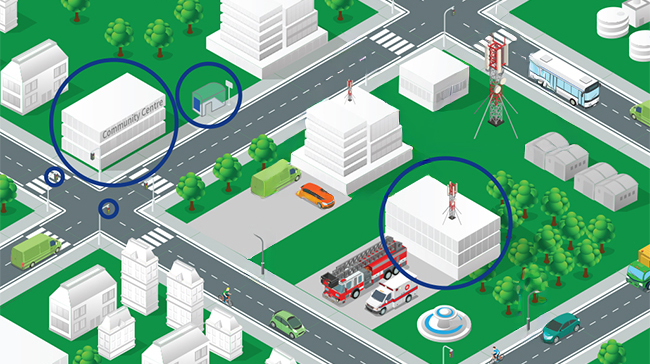
Biens appartenant à la Ville
Tours ou petites cellules sur ou dans un terrain ou un bâtiment de la Ville
Rôle de la Ville
- Contrat de location pour les bâtiments municipaux
- Permis pour emprises
- Lettre d’accord de la Ville portant sur le respect de la politique sur les systèmes d’antennes de Winnipeg par les terrains, les bâtiments ou les structures
Exemples
- Terrains et bâtiments appartenant à la Ville
- Poteaux appartenant à la Ville (p. ex. lampadaires de rue décoratifs)
- Abribus
- Poteaux de feux de circulation
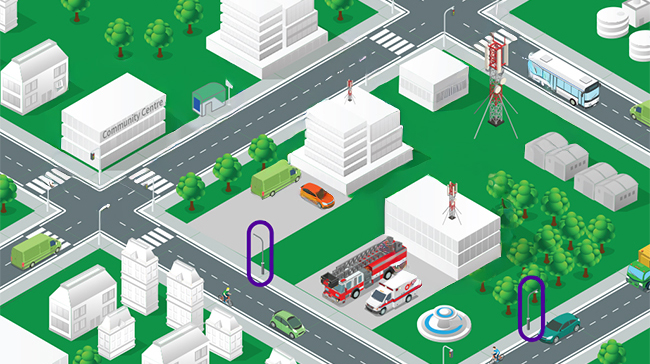
Infrastructure d’Hydro-Manitoba
Des tours et antennes autonomes ou des petites cellules peuvent être installées sur les infrastructures d’Hydro-Manitoba dans le cadre de contrats de location conclus avec Hydro- Manitoba. Ces installations sont autorisées en vertu de l’Encroachment By-law (règlement municipal sur l’empiètement) de la Ville et ne nécessitent pas son approbation.
Rôle de la Ville
- Aucun rôle pour les antennes ou les petites cellules
- Lettre d’accord de la Ville relative aux tours indépendantes sur les biens d’Hydro-Manitoba conformément à la politique de sur les systèmes d’antennes de Winnipeg
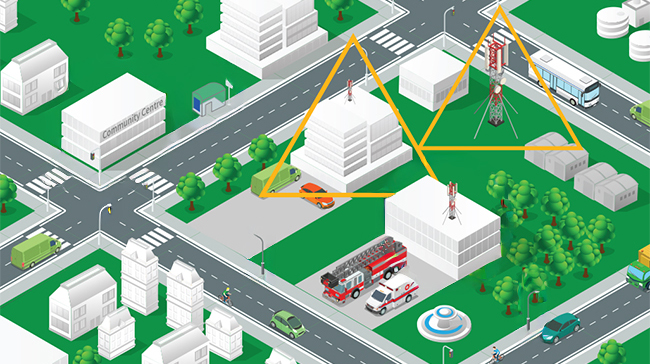
Biens-fonds et bâtiments privés
Emplacements exemptés
Emplacements exemptés de l’examen de la proposition de système d’antennes et du processus de consultation publique en vertu de la politique sur les systèmes d’antennes de Winnipeg.
Rôle de la Ville
- Aucun rôle
Exemples
- À l’intérieur des bâtiments
- Lorsque l’installation de l’antenne n’augmente pas la hauteur de la structure de plus de 25 %
- Tours autonomes de moins de 15 m de hauteur (par exemple, tours de radioamateur)
- Augmentation de la hauteur d’une tour autonome existante ne dépassant pas 25 % de la hauteur initiale
- Systèmes d’antennes temporaires
- Entretien, modifications mineures et déplacement au sein du même site
Sites privés
Contrats de location avec des propriétaires fonciers individuels concernant des sites sur le marché immobilier ouvert.
Rôle de la Ville
- Fournir une recommandation à ISDE concernant tout système d’antennes proposé
Exemples
- Tours autonomes
- Certaines installations d’antennes sur les toits
- Certaines antennes fixées aux bâtiments
Certaines entreprises de téléphonie mobile testent des petites cellules 5G à Winnipeg. Ces essais ne nécessitent pas toujours l’autorisation de la Ville. Dans d’autres villes canadiennes, on utilise déjà des petites cellules 5G. La 5G ne fonctionnera à pleine vitesse et à plein rendement qu’après l’ajout de nouvelles technologies, ce qui prendra du temps.
Les antennes doivent être proches des endroits où les gens utilisent les services sans fil. Les signaux radio ne voyagent pas loin, il faut donc davantage d’antennes pour répondre à la demande. Cela signifie que des antennes peuvent être installées dans des zones résidentielles afin de fournir un service puissant et fiable. Si la demande augmente, il faudra installer davantage d’antennes, que ce soit dans les nouveaux ou les anciens quartiers.
Le gouvernement fédéral définit les règles relatives aux systèmes d’antennes, et notamment la manière dont l’utilisation des terres et la participation du public sont encadrées. Ces règles sont expliquées dans le document d’ISDE intitulé : Systèmes d’antennes de radiocommunications et de radiodiffusion – Circulaire des procédures concernant les clients
ISDE exige des entreprises de systèmes d’antennes qu’elles utilisent les tours existantes dans la mesure du possible. Dans certains cas, en raison de contraintes techniques ou autres, le partage d’une structure n’est pas possible. Par exemple, la taille de la zone à couvrir ou les exigences techniques précises pour la tour proposée peuvent rendre impossible le partage d’une tour existante.
Santé Canada établit des règles de sécurité pour les signaux radio dans un guide intitulé Code de sécurité 6. ISDE utilise ce guide pour veiller à ce que toutes les entreprises de télécommunications sans fil respectent les règles. Les entreprises doivent toujours respecter les normes de sécurité du code, même lorsqu’il y a déjà d’autres antennes à proximité. Elles doivent également se conformer à toute mise à jour des règles de sécurité. Comme Santé Canada réglemente les normes de sécurité applicables aux équipements sans fil, la Ville ne tient pas compte des questions de sécurité lorsqu’elle examine une proposition.
En 2020, la Ville a examiné la technologie des petites cellules afin de mieux comprendre ses avantages, les défis qu’elle pose, et la manière dont elle s’intègre à la 5G. Nous avons demandé l’avis des résidents et des organisations. L’examen a permis à la Ville de :
- procéder à des examens internes;
- solliciter des commentaires du public;
- mener de discussions avec d’autres gouvernements et fournisseurs de services.
L’examen nous a aidés à mettre à l’épreuve nos processus et à déterminer si des changements étaient nécessaires. Nous avons également appris que la Ville avait un contrôle limité sur l’emplacement des petites cellules.
Des questions?
Si vous avez des questions sur les petites cellules installées sur les biens de la Ville, communiquez avec le 311.
Si vous avez des questions sur une installation de petites cellules précise et sur sa conformité avec le Code de sécurité 6, veuillez communiquer avec le fournisseur de services sans fil concerné ou avec le Bureau de district du Manitoba d’ISDE à
ic.spectrumwinnipeg-winnipegspectre.ic@canada.ca ou au 1-800-665-3421.
Si vous avez des questions sur les lignes directrices présentées dans le Code de sécurité 6, veuillez communiquer avec Santé Canada à info@hc-sc.gc.ca ou au 1-866-225-0709.