
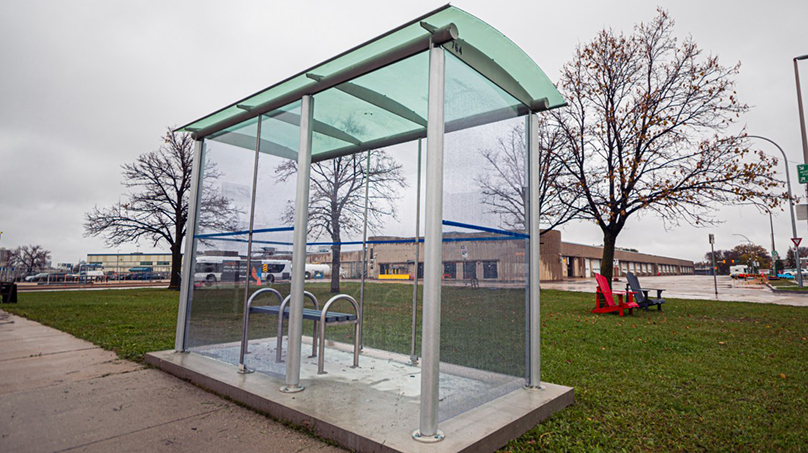
A pilot to curb bus shelter vandalism seems to be doing its job. In Fall 2025, we installed damage-resistant polycarbonate panels at 22 Transit shelters across the city. We chose the locations based on a history of vandalism.
Crunching the numbers
Of the 22 shelters outfitted with polycarbonate panels:
- 14 have not been vandalized
- 6 have had panels pushed out of their frames (those same panels were undamaged and reinstalled)
These same shelters had a combined 189 incidents of broken glass between 2021 and 2025.
Proof is in the performance
Testing the durability of these polycarbonate panels is not the only aspect of this pilot project.
We’re also looking at the effectiveness of our installation techniques. Unlike our old shelter glass, polycarbonate panels are damage resistant and flexible. When impacted, they pop out of the shelter and can be reinstalled.
Since the start of this project, we’ve only had to replace panels that were stolen after popping out place. For example, one shelter was destroyed in a motor vehicle collision. While the panels survived the impact, they were stolen before our crews arrived on site.
To stop panels from “walking away,” we’ve started using manual securements at the shelters. These securements ensure the panels can still flex and pop out while remaining secured at the top.
Saving money
When a shelter is vandalized, we redeploy our on-street staff to clean up the broken glass as soon as possible. Staff spend approximately one hour per shelter cleaning up glass.
Replacing a glass panel is approximately $300 and involves 90 minutes of labour for two staff members.
The success of polycarbonate not only allows us to save money by not having to replace glass, it also means staff can focus on other on-street maintenance priorities.
Adding polycarbonate to other on-street assets
We’re expanding our use of polycarbonate panels.
Following the launch of this pilot project, we looked at other areas where polycarbonate could be beneficial.
We have installed double-layered polycarbonate panels and new external frames at all 24 of our rapid transit display signs. Fourteen of the signs also have new 75-inch display screens. The other 10 signs will be equipped with these screens after winter.
What’s next?
We have already received a new shipment of polycarbonate panels. When the weather warms up, we will be installing panels at six more shelters. This will complete stage three of our testing phase.
We’ll be receiving more panels again in April. This will allow us to outfit 47 of our 5’ x 11’ shelters and three of our 8’ x 15’ shelters before the end of the year.
Sign up for the Our City Newsletter
We have a lot going on at the City that can affect your daily lives. Stay up-to-date on what is happening by signing up for the Our City Newsletter, emailed each Friday.