
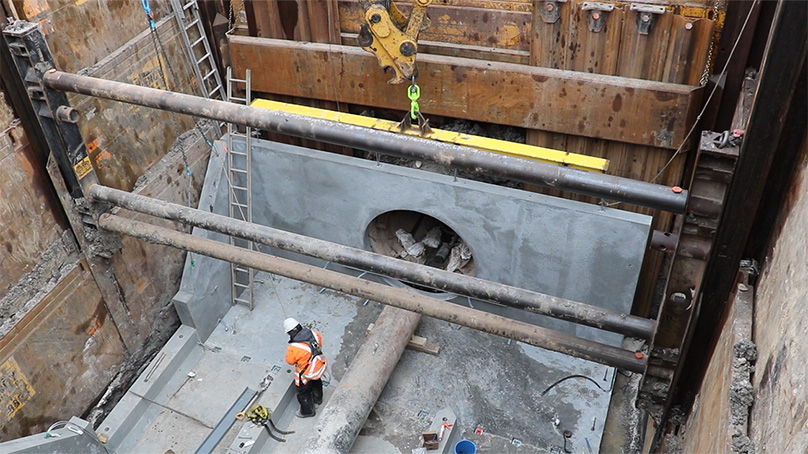
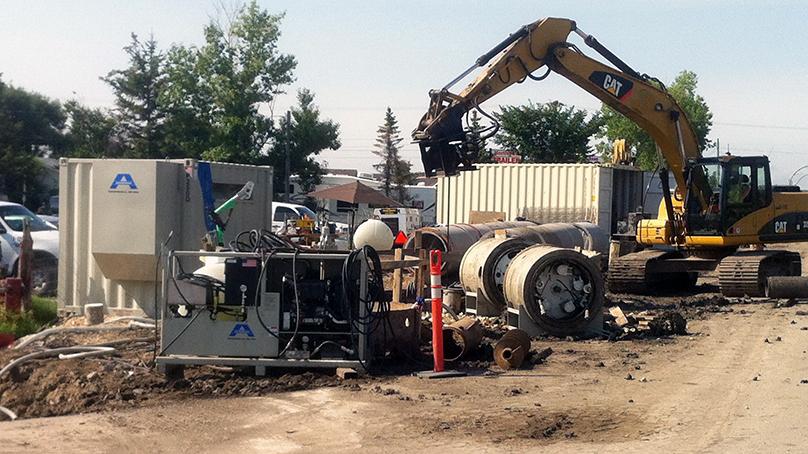
We’re getting ready to bring better sewer service to parts of northwest Winnipeg – which means some service and traffic disruptions are also coming to the area.
Later this summer, we’ll start sewer separation work in the Armstrong Combined Sewer District. The work will happen in stages over approximately five years.
When we finish the sewer work, we will also be reconstructing a portion of Leila Avenue.
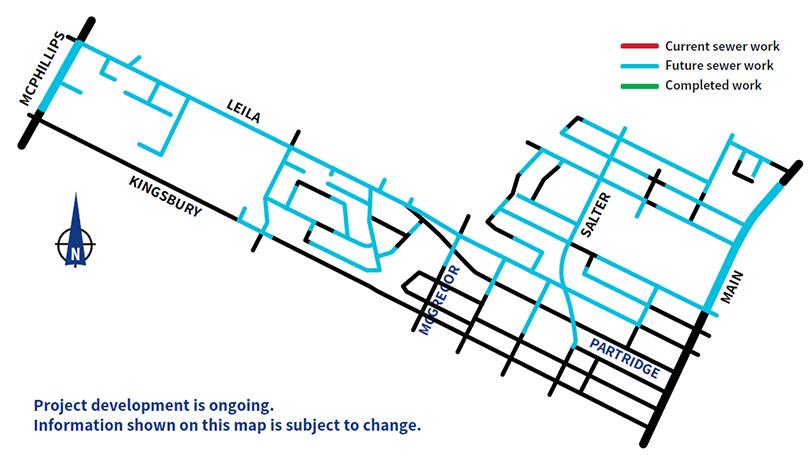
We will let individual properties know of any planned impacts including:
- Reduced access to their front street, private driveways, and approaches
- On-street parking restrictions
- Changes to City services like:
- Recycling, garbage, and yard waste collection
- Water and sewer services
Residents can learn more about the project and its impacts at an information session on June 24, 2026. The come and go event runs 4 – 8 p.m. at Seven Oaks Arena. We will be available to answer your questions and provide more information about the work planned for the area.
Work overview
Northwest Winnipeg is mostly serviced by combined sewers.
In a combined sewer area, underground pipes collect both rain and snow melt, along with wastewater from your home (i.e., bathrooms, kitchens, laundry) to a treatment plant for treatment. During heavy rain or snow melt events, these sewers overflow, releasing untreated wastewater into local waterways. This wastewater release is a combined sewer overflow (CSO). The overflows help prevent sewer backup and flooding in the basements of property owners. But they can negatively impact our waterways.
In a separated sewer system, there are two types of underground sewer pipes:
- Land drainage sewers that only handle heavy rains and snow melt, and then drain to waterways
- Wastewater sewers that are dedicated to carrying just wastewater from homes and businesses to a treatment plant for treatment.
Our work in the area will separate the existing combined sewers, creating a separated sewer system.
Each combined sewer will be converted to either a land drainage sewer or a dedicated wastewater sewer, and a second separate sewer will be installed to handle the other type of wastewater.
Green Infrastructure & other work
Sewer separation isn’t the only tool we have to reduce the impact of CSOs. We are also using Green Infrastructure. Green Infrastructure is the use of plants, trees, and soil to reduce the amount of rainwater entering our sewers.
In the Armstrong Combined Sewer District, we plan to build:
- A bioretention facility
- Soil storage and rain gardens
A bioretention facility treats stormwater. It does this by allowing runoff to be filtered through engineered soils and vegetation. From there, the runoff will flow back to the land drainage system. The goal is to create an attractive landscape feature that treats stormwater. We plan to build it north of Leila Avenue and east of McGregor Street.
Soil storage and rain gardens help capture rainwater and reduce the strain on the sewer system during heavy rain. We will build them on Leila Avenue between McPhillips Street and Garden Park Drive.
All of this work is part of our Combined Sewer Overflow Master Plan, which will help us reduce CSOs and their impacts on our local waterways.
We will be sharing updates online as this project progresses.