
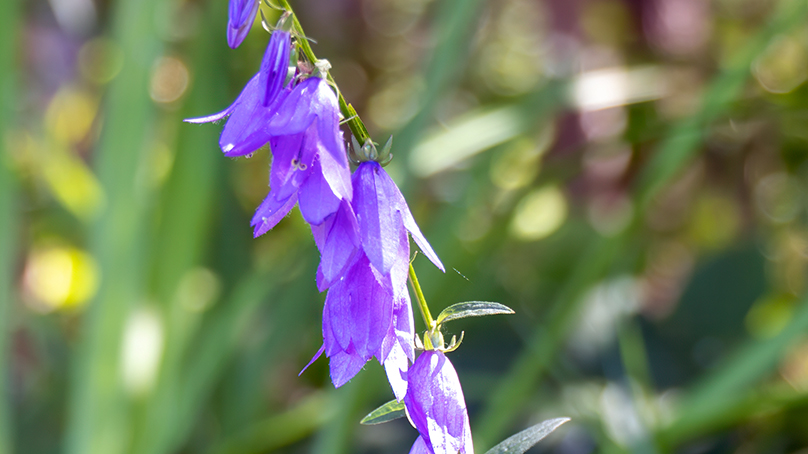
Its purple blooms can be deceiving. Creeping bellflower may look pretty, but the invasive plant can cause problems in yards, gardens, and green spaces.
At this time of year, creeping bellflower is particularly noticeable because it’s flowering. That's why now is a good time to learn about the plant and take action.
Why creeping bellflower is a concern
Many residential gardeners dread finding creeping bellflower in their yards. If left unmanaged, it can make it difficult for their desired plants or grass to thrive.
The plant is a persistent perennial with an extensive underground root system. It also grows in very dense patches. Together, those traits make it difficult for other vegetation to grow alongside it.
If you live in a neigbourhood with a mature tree canopy, you may notice the plant more often.
“It’s a vigorous competitor that can displace desirable vegetation,” said Paul Mutch, Habitat Restoration Specialist with our Public Works Department. “Creeping bellflower also tolerates shaded conditions well and can establish where turf tends to be thinner and less competitive.”
What you can do to manage it
Be prepared for a battle when it comes to creeping bellflower. Early identification and removing it constantly are key to keeping it under control.
If you can, try to stop established creeping bellflower plants from going to seed.
When you do remove it, it’s important to get as much of the root system out as possible, as often as possible. Creeping bellflower can regrow from small pieces of roots. This is one reason it’s so stubborn to remove. If you dig up its roots, carefully collect and dispose of every piece.
While we encourage people to use our curbside yard waste collection program, do not put creeping bellflower roots or plants that have gone to seed in it or your compost bin.
How we monitor weeds
Creeping bellflower is one of many weeds we monitor and manage in our parks, natural areas, and other public areas.
We consider several factors when deciding how to respond. They include the plant species, its location, the extent of infestation, potential environmental impact, and available treatment options.
Our approach may include prevention, monitoring, mowing or removal where appropriate, and targeted control measures.
Our City, Our Podcast
Creeping bellflower was also discussed on Our City, Our Podcast. In the April 2026 episode, Marika Olynyk, Curator of Living Prairie Museum, shared planting tips for local gardeners. She also discussed ways to combat creeping bellflower.
Listen in the player below or wherever you get your podcasts.