
You probably pass through several traffic signals every day without giving them much thought. Red, amber, green. A person walking or a hand telling you to stop. Our lives move around them, but they weren’t always there.
This marks 100 years since the first traffic light was installed. Since then, signals have helped us get to where we’re going safely and efficiently.
A new way to cross the street
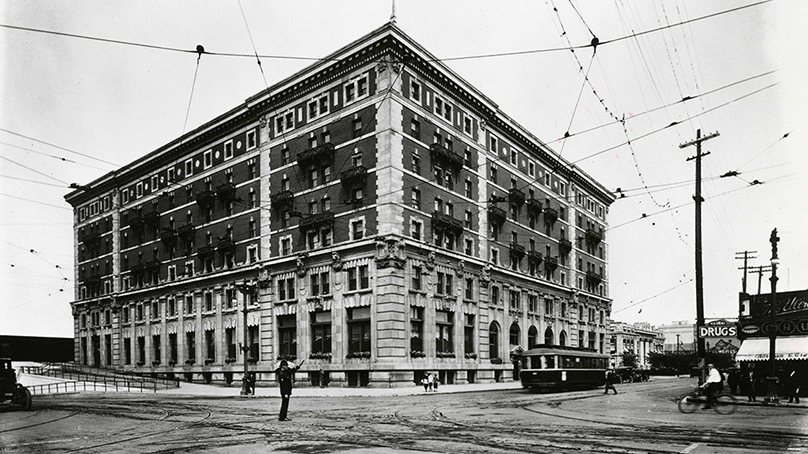
Called the “Silent Cop” by the Winnipeg Tribune, Winnipeg’s first traffic signal was installed in September 1926. It was meant to bring order to busy corner of Higgins Avenue and Main Street.
“It was absolute chaos at the time,” said Morgan Glasgow, our Traffic Signals Systems Supervisor on a recent episode of Our City, Our Podcast. “There was a mix of streetcars, cars, horses, and people crossing the street all over the place. I can't imagine it worked too well.”
It was a very basic concept. The signal was a sign that automatically switched between “stop” and “go” every 30 seconds. It was installed on springs so it could bounce back if it was hit.
According to newspaper clippings from the time, people were puzzled by the new sign. At first, they didn’t realize they had to obey it, leading to confusion at the corner.
The next month, similar signs were put up in front of the Eaton’s building on Portage Avenue, at Donald Street and at Hargrave Street.
The following year, the three-colour traffic signals we know today were introduced. They were tested for the first time in April 1927 at Portage Avenue and Main Street.
A lot has changed over the century
While the red, amber, and green lights remain, the technology behind our traffic signals has changed greatly over the past century.
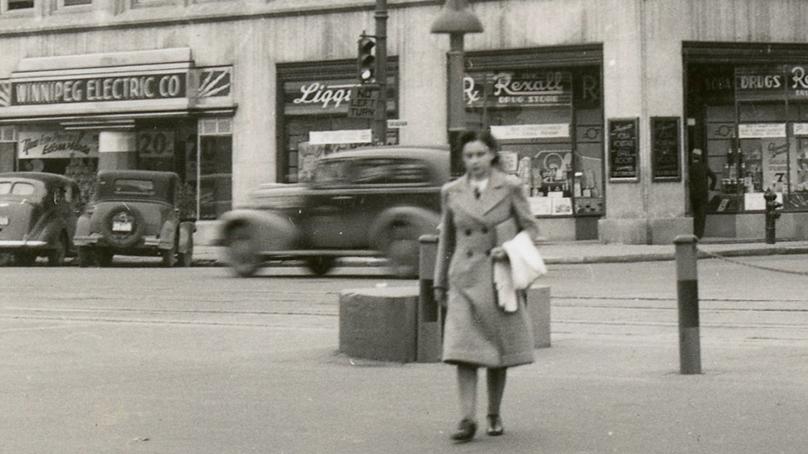
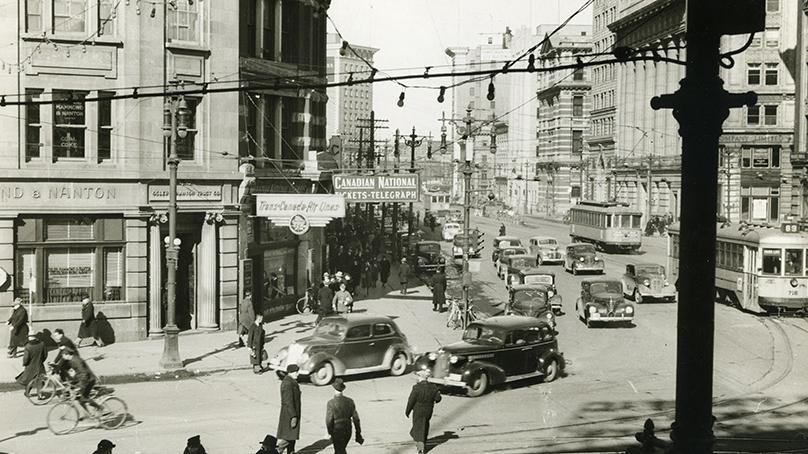
Today, we have over 700 signalized intersections and a network of around 200 traffic cameras.
“The biggest change since Higgins and Main is that all the intersections are connected through the cell network,” said Glasgow. “That, combined with our cameras, allows us to see what’s happening on our streets and make changes from the office in real time.”
Whether it’s construction, a collision, or a concert, our Transportation Management Centre can tweak the signals to help ease some of the congestion.
The way we detect vehicles, bicycles, and pedestrians waiting at an intersection is also changing.
Traditionally, we’ve used wire loops embedded in the pavement. You may recognize these as diamond cutouts on the streets near intersections. When a vehicle drives over them, an electrical signal is sent to a controller for the light to change.
“We’re in the process of replacing that aging technology with radar and video detection at intersections,” said Glasgow. “This makes it easier to detect all modes of transportation, instead of just vehicles.”
Making our streets and sidewalks safer for everyone
We’re focused on enhancing pedestrian safety and accessibility around our city.
Over the past few years, audible signals have been installed at all intersections and crosswalks that are signalized in the city. Different tones indicate what is happening with the traffic signals.
“The two main tones provide people with vision impairments a way to understand what crosswalks are active and safe to use,” he said. “Since we accomplished that, we've had to kind of move the goalposts to keep improving.”
Other enhancements include leading pedestrian intervals at over 160 intersections around the city. This provides pedestrians five seconds to start crossing the street before the light turns green for vehicles.
We also removed push buttons at many downtown intersections for a good reason. Before you’d have to push them to have the crosswalk be served. Now, the signal timing incorporates the added time for pedestrian by default, every light cycle.
From designing longer amber and red lights, or adding protected left turns and leading pedestrian intervals, these safety treatments often come with some added user delay at intersections.
“Our number one priority is safety for everyone at intersections,” said Glasgow. “Everyone benefits in the end."
Our City, Our Podcast
If you want to dive deeper into our traffic signals systems, have a listen to the July 2026 episode of Our City, Our Podcast.
Glasgow chats more about how we balance traffic flow with everyone’s safety and shares some uniquely Winnipeg aspects to our traffic signals. He even tackles some myths around changing the traffic lights in your favour.
You can listen to it in the player below or wherever you listen to podcasts.