
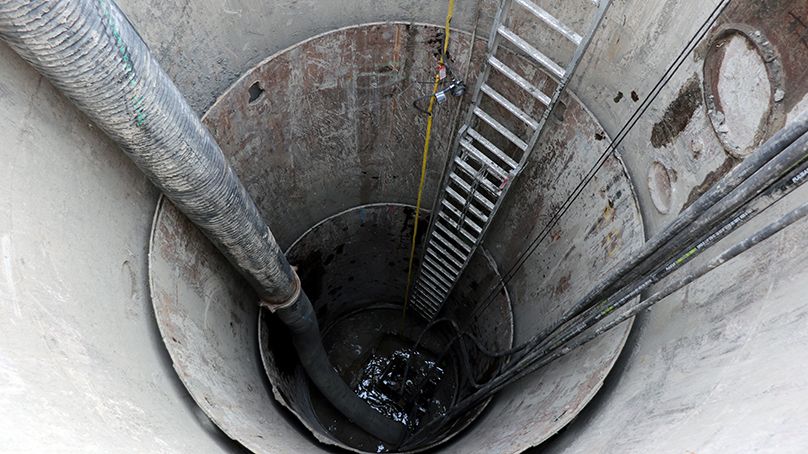
If you’ve headed down north Main Street lately, you’ve likely seen a very busy construction site. Work is continuing on critical upgrades at our North End Wastewater Treatment Plant (NEWPCC). What you don’t see is the impactful work also being done well below the surface.
One of these projects is upgrading our Northwest Interceptor (NWI) - a 47-year-old concrete sewer pipe that brings wastewater to NEWPCC for treatment.
The NWI pipe runs right through the planned locations of both the Biosolids and the Nutrient Removal Facilities at NEWPCC.
The risk when installing concrete piles
Potentially damaging this pipe was a known risk before starting work on installing concrete piles for the Biosolids Facilities.
We knew pounding pre-made piles into the ground was quicker and more affordable than pouring concrete into individual holes. But the vibrations from the pounding could cause the NWI to fail. That could cause sewer back-up for homes in northwest Winnipeg.
"These are big risks we didn’t want,” said Lana Obach, Major Capital Project Engineer, Biosolids Facilities.
The pipe failing would also delay the project.
“We know delays increase construction costs,” said Obach. “Identifying and managing risks like this before shovels are in the ground is really important. Finding solutions to reduce these costly risks can also keep our projects on track.”
Our solution
In the end, we chose to use pre-made piles. We also opted to use cured-in-place pipe (CIPP) technology to protect the NWI from the vibrations.
CIPP is used to renew and strengthen existing pipes, without having to dig and replace them. We’ve been using this type of technology to renew sewer pipes in Winnipeg for decades already.
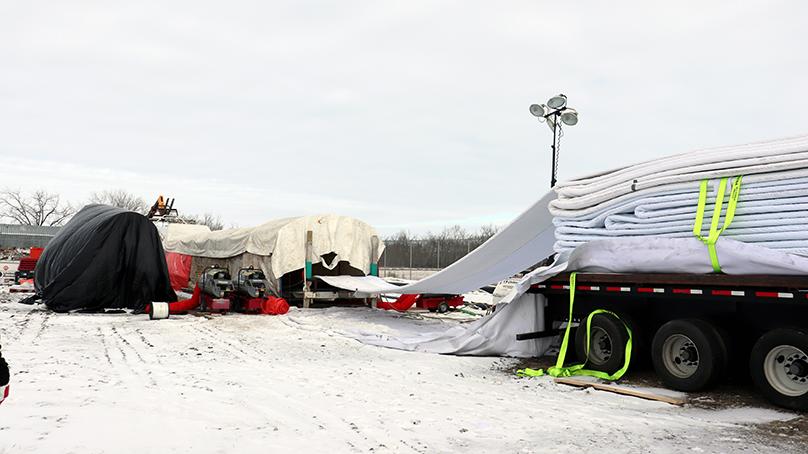
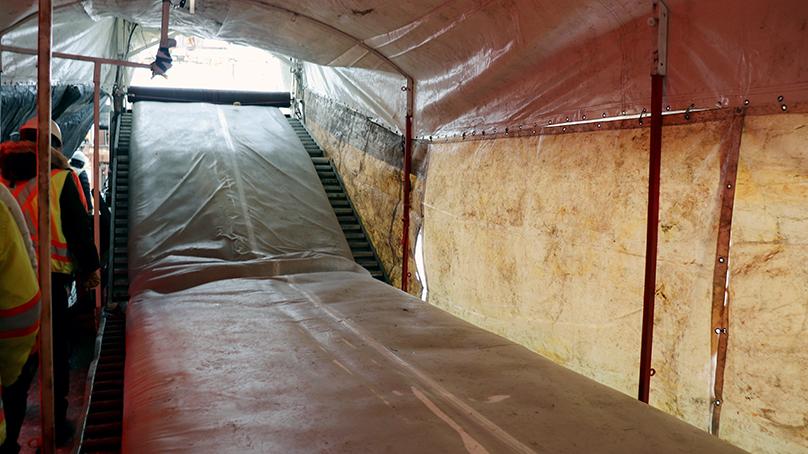
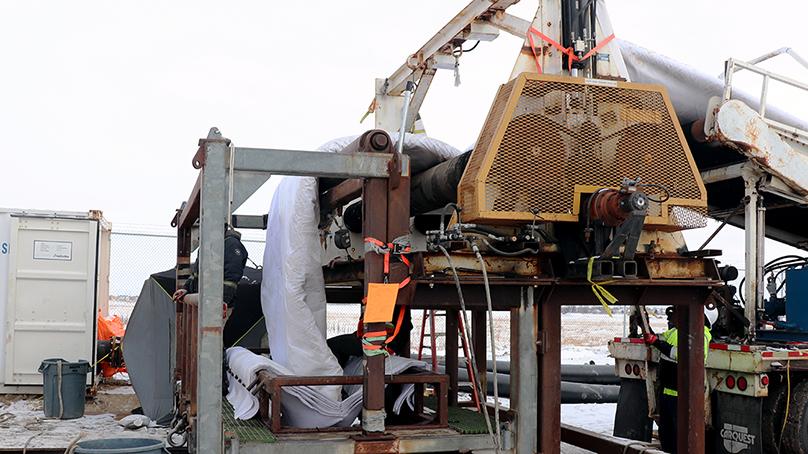
It works by inserting a resin-filled liner into the existing pipe. We do that through existing manholes or newly created access shafts. This lining is custom-sized to fit the right length and diameter. Once the lining is in place, we use hot water, steam, or UV light to harden or cure the lining. That effectively creates a new pipe inside the existing pipe.
In the case of the NWI, we had to add the resin into the felt tube on site. It was too heavy to transport the liner with resin already inside it.
“Due to the size of the Northwest Interceptor, we had to do things a little differently,” said Obach. “It is only the second time in 25 years that we’ve had to install CIPP this way.”
The lining makes the NWI more flexible, so it can take vibrations without cracking. This reduces the risk of the NWI failing from vibrations due to construction. The lining has also improved the pipe capacity, as it is smoother than the original concrete pipe.
Saving time and money
Using CIPP technology allowed us to work more quickly by using pre-made concrete piles and helped keep the project on track.
The new lining costs about $4.4 million, but it’s saving us money on the upgrade project. Installing pre-made concrete pilings, instead of drilling out the soil and pouring the piling concrete onsite, saved about $7 million. Plus, this process extended the life of the NWI by several decades. That means no expensive pipe replacements for some time.
Our City, Our Podcast
Obach, along with Linda McCusker, are on the team leading the NEWPCC upgrades. They joined Our City, Our Podcast to discuss why this massive project is critical for Winnipeg. This episode was released in February 2026.