
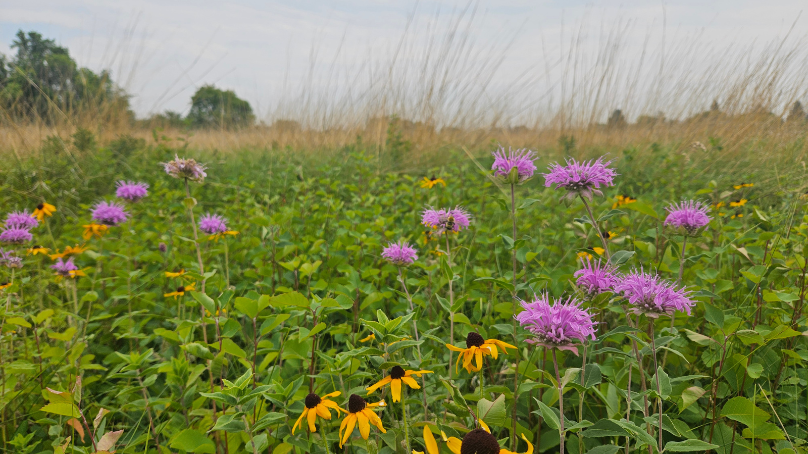
It's a little-known fact that Winnipeg is home to one of North America's last remaining tall grass prairies.
This grassland habitat once stretched from Manitoba to Texas. Today, it's shrunk to just one percent of its original size – 13 hectares of which is an urban nature preserve right here at home.
The Living Prairie Museum spans a large pocket of land near Ness Avenue with a deep and storied history worth celebrating.
“If it weren’t for the care and foresight of people in the past, we would not have this special jewel right here in Winnipeg," said Marika Olynyk, museum curator.
In the late 1960s, residents of (what was then) the City of St. James recognized the unique landscape of the space. They worked with the International Biological Program and other groups on a campaign to preserve the property, which was found to hold more than 150 species of wildflowers and prairie grasses.
In 1974, the newly formed City of Winnipeg dedicated the site as a park.
It officially became the Living Prairie Museum in 1976, when an interpretive centre opened at the site. It's run educational programming and seasonal sessions ever since.
In the early 2000s, we installed a new classroom space and playground. The classroom space now serves as a grow room for plants used in habitat restoration projects.
Most recently, we built a medicine garden in conjunction with the Indigenous community. Our programming inspires to take a "two-eyed" approach that shares both ecological and traditional perspectives on the land.
"We're constantly evolving programming as the environment and discussions around it change," said Olynyk.
We're so excited to celebrate 50 years of preservation and adaptation.
Next month, the museum will celebrate its anniversary with a weekend of special events, interpretative sessions, and butterflies – and a look forward at how it will evolve next.
“There are many hidden secrets and special surprises in the grassland," said Olynyk. "My favourite thing is to see what new observations our visitors have to share after they go for a visit on the prairie. It’s always changing. We look forward to being here for generations to come."