
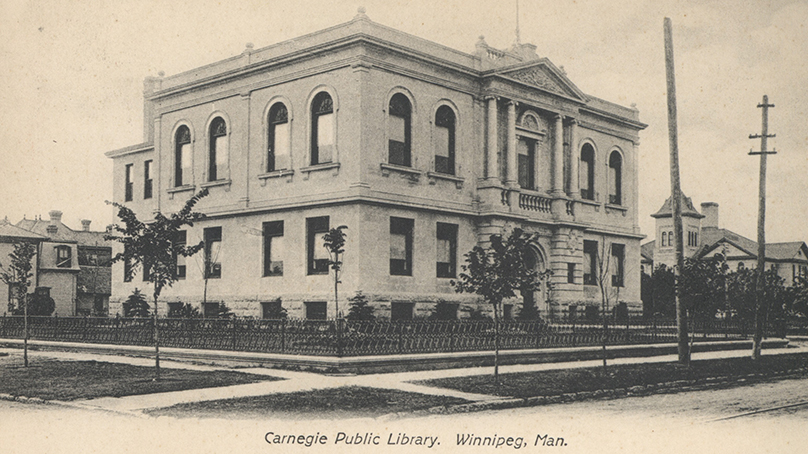
For more than a century, the Carnegie Library has been a home for stories. Initially as Winnipeg’s first public library, and then the City of Winnipeg Archives. But some of the building’s most shared stories are the ones our staff have struggled to explain.
Unusual sounds. Curtains moving on their own. An empty elevator travelling from floor to floor. A woman in white.
A building made for stories
The Carnegie Library was originally funded through a $75,000 grant from American philanthropist Andrew Carnegie. It opened in 1905 and by 1910, it was the second busiest library in Canada. Over 341,000 books were loaned from it annually.
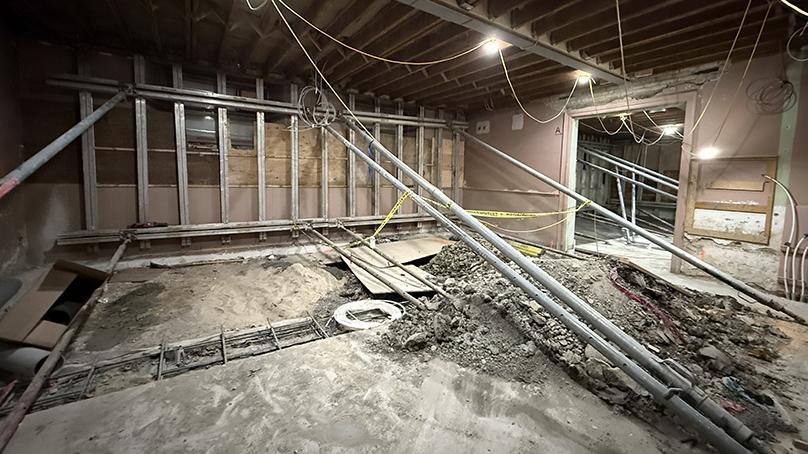
The building at 380 William Avenue became exclusively used for archival records in 1994. Unfortunately, a rainstorm heavily damaged it in 2013. It sat empty until last year when construction crews moved in.
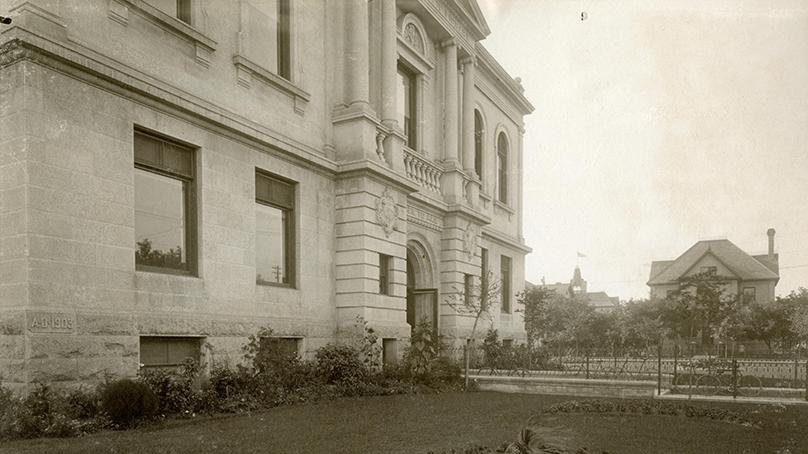
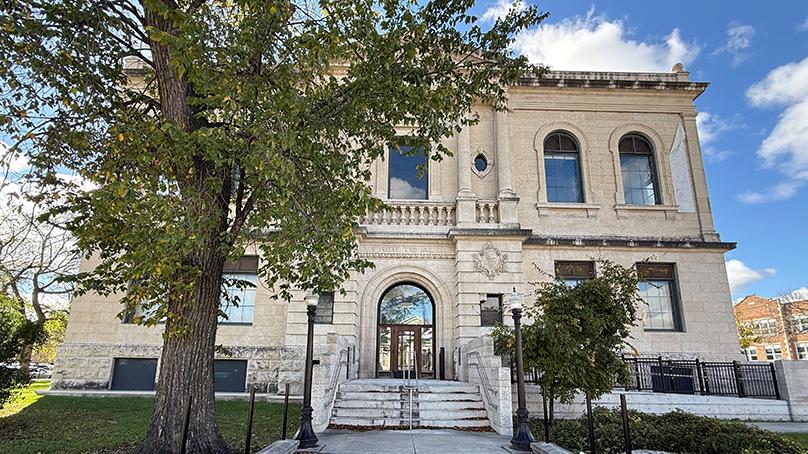
The building is in the process of being restored for the Archives as the City's Winnipeg 150 Legacy Project. The Carnegie Library’s restoration has also stirred up stories of the past.
While some might be attributed to the building’s age, others are unexplainable.
Where history and mystery meet
A special spooky season episode of Our City, Our Podcast explores the folklore surrounding the building. Konrad Krahn, City Archivist, and Allan Neyedly, Senior Archivist and Records Manager, work together to preserve the city’s past, including these tales.
They have been shared by generations of our staff who’ve worked inside the historic structure.
“There were lots of occurrences where we did have an older elevator and it wasn't supposed to move when nobody was in it,” said Krahn. “Every now and then, staff would be on one of the floors, and the elevator doors would just open.”
One of the floors in the building could only be accessed by select staff.
The elevator needed a key to go up to that floor but one day someone working there saw the elevator doors opened and there was nobody inside.
Another story involved Neyedly’s coworker who initially didn’t believe the building’s folklore.
“They were working on a project and had boxes and all the materials and records spread out,” he recalled. “They went away for the evening, and when they came back, it had all been put away and put on a shelf.”
With no possible explanation of what happened, Neyedly said the colleague was shaken and started to believe that the unbelievable had happened.
Seeing his reaction is what started to sway Neyedly.
“The persistent nature of the stories really convinces me that there might be something here to them,” he said. “Over the years, we've collected these stories and a couple of them maybe can't be explained by the building being old.”
Unexplained happenings
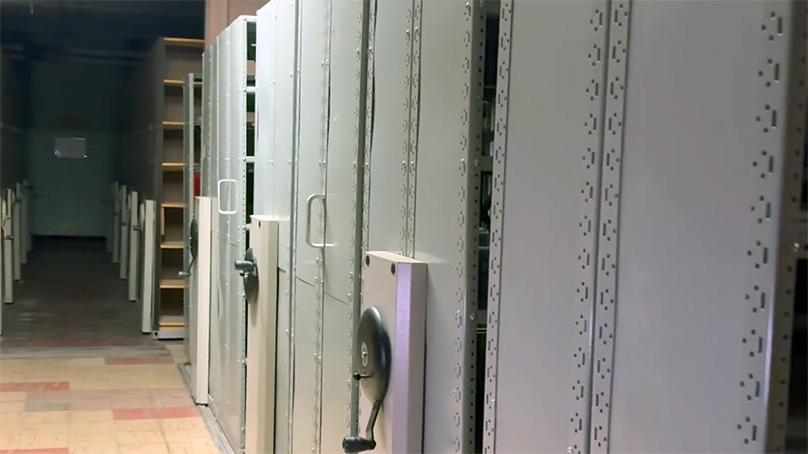
When Neyedly gave tours of the building, he often started in the basement. It’s a maze of small rooms with very few windows to let natural light in.
“There was a room in the basement that you could only get to by moving all the mobile shelving forward,” he said. “This staff member was downstairs working, had moved the shelves all forward, and for some reason was in that back room. Suddenly, the shelves started to move and close in on him.”
The employee got out as quick as he could. Neyedly was told nobody else was in the basement at the time.
Another story involved a staff member who took her ring off before washing her hands.
“After she was done, she went to put her ring back on and it didn't fit anymore,” said Neyedly. “It was no longer a circle. It was oval shaped as if someone had crushed it or squished it into that shape.”
While Konrad is skeptical of some of the stories, there’s something different about hearing one come from a colleague.
I trust and believe him fully.
In that instance, a former City archivist told Krahn about something that happened to him one night while he was working on the first floor of the building.
“He was working alone…and a loud bang startled him,” Krahn said. “When he went upstairs, he saw there was a box that had been thrown from the shelves and its contents distributed on the floor.”
Krahn said it was unlikely the box would have fallen on its own because it was very heavy, tightly packed, with a lid on.
“He was so disturbed by what happened, he threw on his jacket, ran out the door, and didn't clean up the box until the following day,” he said.
The stories we share matter
As an archivist, Krahn sees value in keeping these stories alive.
“My approach to oral history and folklore is that there's a lot to learn from these stories,” he said. “They inspire the research, inform, and act as important guides to where we need to look. They also provide vital colour to history because so often they are about real people and how they lived in a real point in time.”
Construction is set to wrap up next year and then Archives will move back in. Blaming unexplained sounds and drafts on an old building will then be harder to do.
“Archives are a collection of memories, and we preserve the past, and we bring it to life,” said Neyedly. “Perhaps these stories are just another way that we're bringing this past to life and maybe there is some of the past alive in these buildings too.”
The family in the basement
Neyedly and Krahn put their research skills to work trying to find what in the building’s past might be behind the stories.
They discovered the Carnegie Library was also home to a family who lived in the basement. The dad, James T. Simmons, was hired in 1905 as the building’s live-in caretaker. Along with his wife, they raised four children. Unfortunately, one of them died when she was a young adult and still living in the building.
Neyedly and Krahn explore this family’s history, and possible connections to some of the unexplained experiences, on the Our City, Our Podcast episode.
You can listen to it in the player below or wherever you listen to podcasts. New episodes of the podcast are released on the first Wednesday of each month.