June 21 marks Indigenous Peoples Day in Canada, a time to recognize and celebrate the history, cultures, and traditions of First Nations, Inuit, and Métis peoples. As our teams join communities across the city in celebration, we’re also reflecting on a meaningful project within the Winnipeg Police Service.
Strengthening relationships with Indigenous communities remains a priority for Chief Gene Bowers. When the need for a new WPS Tipi was identified, it became an opportunity to do more than simply acquire one. It became a chance to learn, connect, and build something together.
From harvesting trees to stripping and sanding the poles, members from across the Service from frontline officers to Executive Management came together, guided by tradition, to construct the tipi by hand. The experience carried a deep sense of meaning, grounding our commitment to reconciliation in action.
This tipi now stands as more than a structure. It’s a lasting reminder of our responsibility to listen, to learn, and to continue moving forward in a good way.
Harvesting the poles
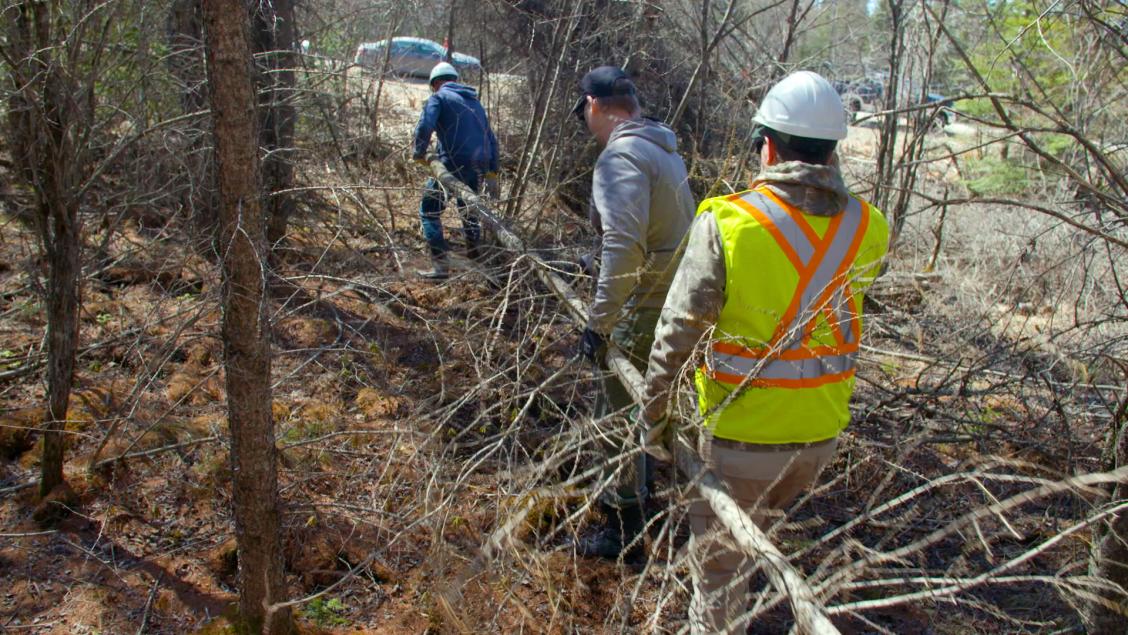
The tipi poles were harvested near Lac du Bonnet and Beausejour with the guidance of Elder Mike Calder, who oversaw the entire process. A group of volunteers from our Service took part in the harvest, spending the day learning about traditional Indigenous practices.
Together, WPS members carefully selected 20 tamarack trees that were straight, strong, and lightweight – qualities that ensure the poles can evenly distribute weight, withstand strong winds, and remain easy to transport. Once selected, the trees were respectfully felled, trimmed, and carried to the edge of the forest before being transported back to Winnipeg to dry.
Each pole measures approximately 22 to 25 feet in length and weighs between 25 and 50 pounds.
Before any trees were harvested, a ceremony took place, including a tobacco offering and a feast. This ceremony was an important way to express gratitude and respect for the land and the trees that made this work possible.
Learning traditions and treatments
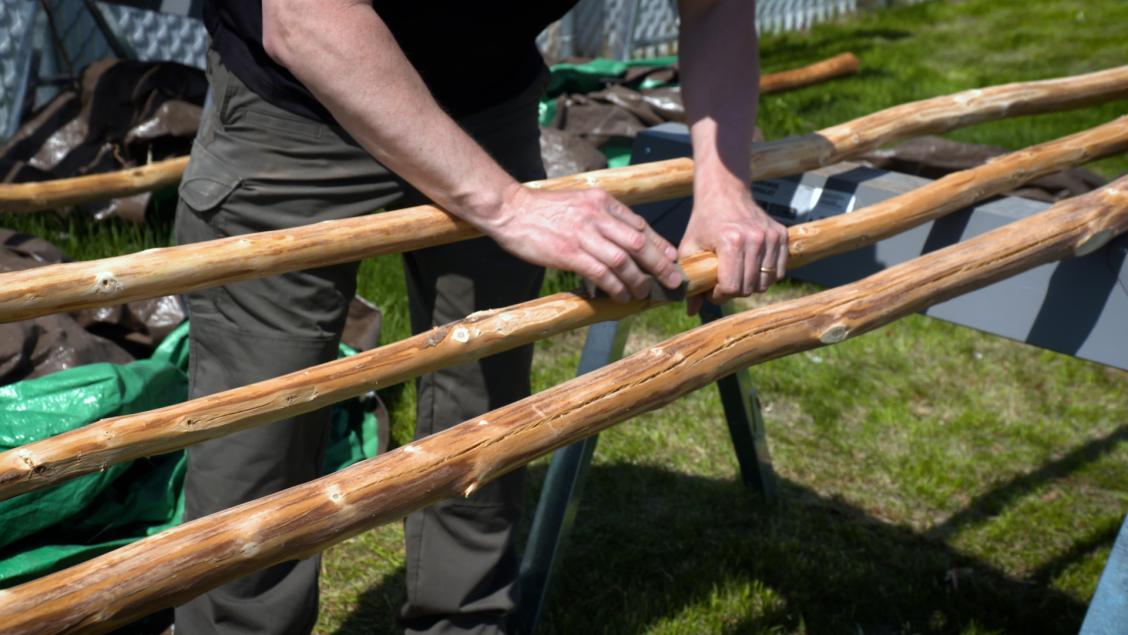
Once the poles were harvested, the next phase of the work began. Guided by Elder Mike Calder and members of our Indigenous Partnership Section, members from across the organization (including Chief Bowers) were invited to take part in stripping and sanding the trees.
For many, this was their first experience contributing to the construction of a tipi, making it a meaningful opportunity for learning and connection. The Service was proud to create space for members who might not otherwise have had the chance to participate in this important work.
The work was carried out with intention and respect. Prayers were offered, smudging took place, and the air was filled with the rich, grounding scents of tobacco and balsam as we worked together.
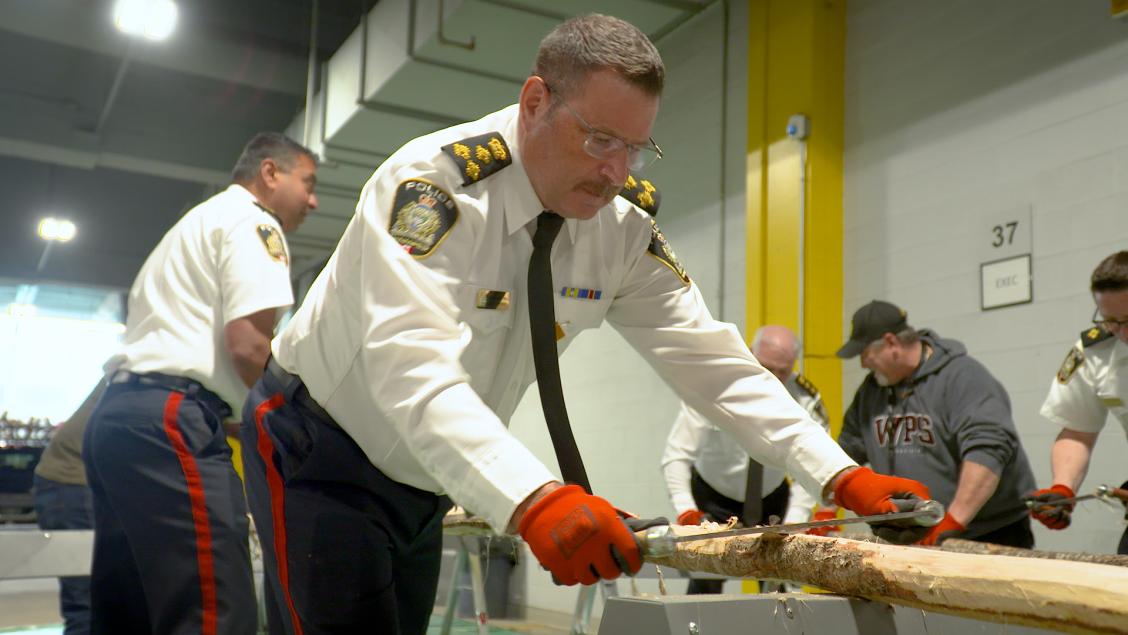
Once the bark was removed, the work continued outdoors. Sanding the poles created a smooth, finished surface that helps support the tipi structure while preventing damage to the canvas. Protective coatings were then applied to make the poles resistant to water and weather.
Carefully prepared and crafted, these poles are built to withstand the elements and serve the community for many years to come.
Canvas art based in community partnership
The tipi canvas is set to be thoughtfully designed and painted by our partners at the Behavioural Health Foundation (BHF), an organization known for its community programming rooted in Indigenous traditions and ceremony. The Winnipeg Police Service has worked closely with BHF and other partners to learn from and respectfully engage with Indigenous teachings. The WPS was honoured when they offered to incorporate the tipi into their programming, with its design painted by their residents.
The finished canvas will feature the crest of the Winnipeg Police Service, alongside elements inspired by Indigenous traditions, including representations of the Seven Sacred Teachings. Together, these elements reflect a shared commitment to learning, respect, and community connection.
Moving forward in a good way
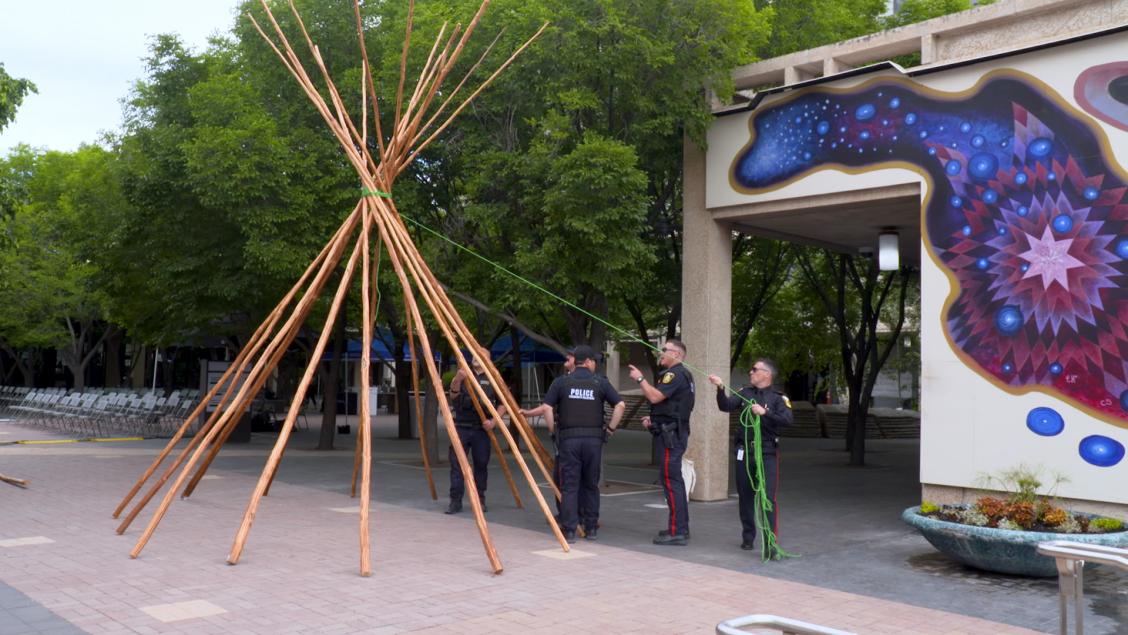
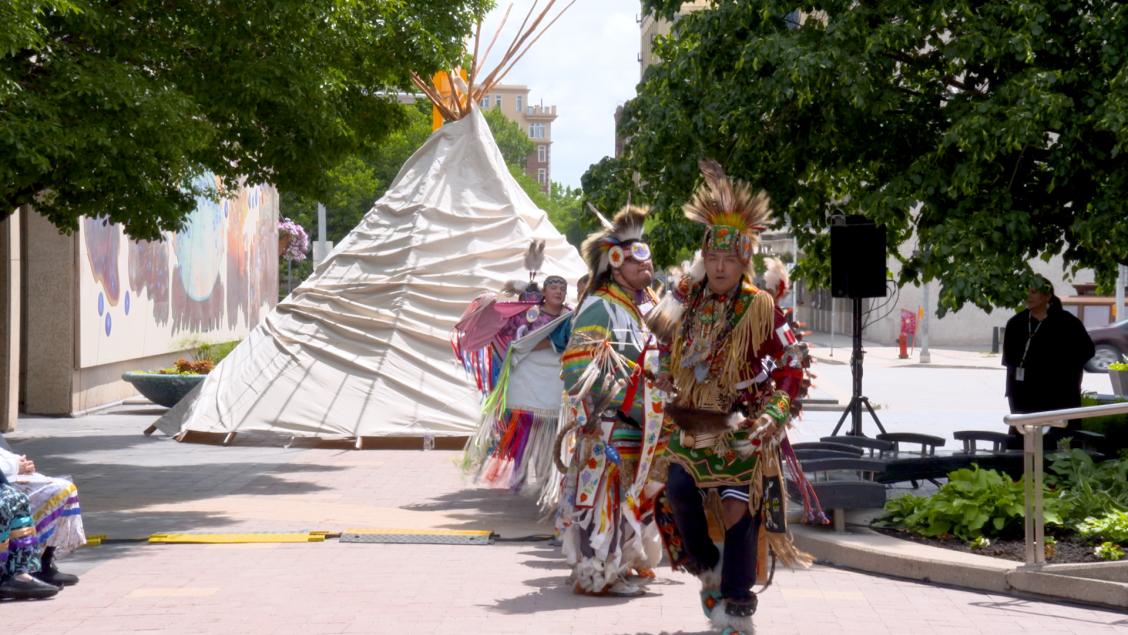
On Friday, the WPS Tipi made its debut at the National Indigenous Peoples Day Ceremony at City Hall. We are proud of the work that has gone on behind the scenes to make this possible. Perhaps you will find the meaning in it, too.
Today, June 21, Canadians mark National Indigenous Peoples Day. You can find the WPS Tipi at The Forks for their National Indigenous Peoples Day Celebration where our teams will spend time celebrating in community as the achievements, history and rich culture of First Nations, Inuit, and Metis people are honoured. Festivities begin at 10:30 a.m., and the closing ceremony takes place at 5:00 p.m., followed by live music.
Wishing everyone a safe and celebratory Indigenous Peoples Day.