
Le centre des communications du Service de police de Winnipeg (SPW) est le principal centre d’appel de la sécurité publique (CASP) de Winnipeg depuis 1959. Nos téléphonistes reçoivent environ 1 350 appels par jour du public, ce qui comprend les appels urgents au 911 ainsi que les appels non urgents.
Les téléphonistes ont d’excellentes capacités d’écoute active, de résolution des conflits et de multitâche. Ils ont une pensée critique et sont en mesure de réagir de façon calme et efficace aux situations d’urgence. Les téléphonistes sont le lien essentiel entre les membres de la communauté et les services de sécurité publique dont ils ont besoin, y compris d’autres organismes d’intervention d’urgence tels que le Service d’incendie et de soins paramédicaux de Winnipeg.
Le rôle du téléphoniste des communications d’urgence n’est pas adapté à tout le monde. Pour savoir si ce poste pourrait vous convenir, veuillez remplir le questionnaire d’autoévaluation.
Nous n’acceptons pas de candidatures non sollicitées. Toutefois, si vous voulez faire carrière en tant que téléphoniste des communications d’urgence, veuillez télécharger la trousse d’information sur les téléphonistes. Toute vacance associée à ce poste sera affichée sur la page des postes vacants.
Composez le 204-986-6204.
- Avoir au moins 18 ans
- Citoyenneté canadienne ou résidence permanente (immigrant admis)
- Aucune participation à une activité criminelle au cours des deux dernières années (ce qui comprend les drogues illicites)
- Aucun casier judiciaire n’ayant pas fait l’objet d’une réhabilitation
- Diplôme de 12e année, attestation d’éducation générale (GED) ou l’équivalent*
- Diplôme d’un programme d’immersion en français ou d’un autre programme de langue (atout)
- Connaissances informatiques de base et capacité de maîtriser de nouvelles technologies et de nouveaux programmes et de s’y adapter facilement
- Maîtrise avérée (niveau de base) de Microsoft Word, Excel et Outlook
- Capacité manifeste de dactylographier avec précision un minimum de 40 mots à la minute
- Connaissance manifeste des rues, des routes, des artères principales et des lieux communs de la ville de Winnipeg
- Maîtrise de l’anglais, à l’oral comme à l’écrit, et du français si le poste est bilingue; niveau intermédiaire au moins
- Capacité de communiquer dans une deuxième langue (atout)
- Capacité de travailler de façon autonome avec un minimum de supervision
- Excellent sens de l’organisation, et capacité d’accomplir plusieurs tâches à la fois et d’établir les priorités
- Capacité de garder son calme et de travailler sous pression lors de situations d’urgence
- Excellente pensée critique permettant d’évaluer les situations de façon méthodique, stratégique et collaborative et de prendre de bonnes décisions
- Conscience des enjeux culturels et sensibilité envers ceux-ci
- Excellent entregent, capacité de faire preuve d’assurance et de respect, surtout envers le public, et capacité de travailler de façon efficace dans un contexte d’équipe formel et informel
- Capacité de préserver la confidentialité et de protéger les informations sensibles
- Capacité d’autoévaluer son rendement et sa croissance professionnelle
- Capacité de recevoir une rétroaction constructive relativement à son rendement au travail
- Capacité d’établir et de maintenir un environnement de travail positif, respectueux, sécuritaire et sain qui favorise, sur les plans physique, psychologique et social, de bonnes relations de travail avec le personnel de tous les niveaux dans un contexte de travail d’équipe
Les candidats qui ont reçu leur éducation à l’extérieur du Canada doivent avoir une éducation comparable au niveau minimum requis au Canada. Les candidats qui soumettent des titres de compétence étrangers doivent avoir fait émettre un rapport d’évaluation officiel par un service d’évaluation canadien reconnu au moment de postuler. Si vous ne soumettez pas la preuve d’un diplôme de 12e année obtenu au Canada, nous exigeons que vous soumettiez la preuve d’un programme postsecondaire de deux ans à temps plein accompli au Canada.
Test 1
SkillCheckMC évaluera votre vitesse et votre exactitude en matière de dactylographie.
L’évaluation est composée d’un réchauffement de trois minutes (facultatif) suivi d’une évaluation de cinq minutes. L’ordinateur met dans un tableau les résultats bruts et nets de chaque évaluation. Pour chaque erreur, deux points sont soustraits de la vitesse brute. Le résultat net le plus élevé obtenu lors de l’évaluation sera utilisé pour déterminer le niveau de dactylographie du candidat.
Les candidats doivent obtenir un résultat minimum de 40 mots à la minute pour réussir le test.
L’évaluation a lieu à distance à partir de votre ordinateur.
Test 2
On utilise le test informatisé CritiCall de préparation à l’emploi pour mesurer les capacités et aptitudes sous-jacentes qu’une personne doit posséder avant de suivre toute formation pouvant lui être imposée si elle est embauchée en tant que téléphoniste du 911.
CritiCall est ce qu’on appelle un test de rendement, ce qui signifie qu’il simule un environnement de répartition générique, sans toutefois exiger des connaissances professionnelles spécifiques.
En d’autres mots, CritiCall vous met dans des situations qui exigent les mêmes connaissances, capacités et aptitudes qui vous seront nécessaires pour réussir dans l’environnement d’urgence du 911.
La réussite du test exige la maîtrise de capacités et d’aptitudes telles que les suivantes :
- Multitâche
- Établissement des priorités
- Dactylographie
- Lecture de cartes
- Rappel de mémoire
- Compréhension
- Probabilité
- Saisie des données
- Processus décisionnel
Le processus de soumission au test CritiCall prendra deux ou trois heures et sera organisé sur les lieux par l’Unité du recrutement du Service de police de Winnipeg.
Test 3
Si le poste est bilingue, les candidats devront se soumettre à une évaluation de leurs capacités linguistiques en français.
| Téléphoniste | Horaire | Aux deux semaines | Annuel |
|---|---|---|---|
| Étape 1 | 30,67 $ | 2 453,87 $ | 63 800,76 $ |
| Étape 2 | 32,95 $ | 2 636,43 $ | 68 547,32 $ |
| Étape 3 | 34,18 $ | 2 734,24 $ | 71 090,38 $ |
| Étape 4 | 36,13 $ | 2 890,72 $ | 75 158,87 $ |
| Étape 5 | 38,09 $ | 3 047,25 $ | 79 228,41 $ |
| Étape 6 | 39,64 $ | 3 171,12 $ | 82 449,03 $ |
| Étape 7 | 41,08 $ | 3 286,31 $ | 85 443,97 $ |
* La grille salariale ci-dessus a été mise à jour le 31 décembre 2024.
À noter : Les téléphonistes sont en probation pendant douze mois.
Environ cinq semaines, du lundi au vendredi, de 8 h 30 à 16 h 30, en salle de classe.
Après la partie en salle de classe, on assignera un mentor aux membres, et ces derniers feront des quarts en rotation pour recevoir une formation d’environ 350 à 450 heures.
Cette formation individuelle vise à permettre aux apprentis de se perfectionner de façon supervisée pour leur sécurité et celle du public. À la fin de la période de formation, on évaluera la capacité des apprentis à travailler de façon indépendante.
Normes relatives à la vision
Vision non corrigée
- Vision 20/40 les deux yeux ouverts
ou
Vision corrigée
- Au moins 20/30 les deux yeux ouverts avec des lentilles correctrices
Normes relatives à l’audition
- Des seuils normaux d’audition non corrigée ne dépassant pas 30 décibels pour chaque oreille à des fréquences de 500 Hz, 1 000 Hz et 2 000 Hz, et aucune perte importante à des fréquences plus élevées
Pour toute question, veuillez communiquer avec la Direction de la santé au travail de la Ville de Winnipeg au 204-986-5218.
Partners in Community Safety: Spotlight on Police Communicators
Winnipeg Police Service Communications Centre members are a trusted lifeline between the public and emergency services.
They are the first voice people hear in moments of crisis. They bring calm, clarity, and direction when it matters most.
Every day, they answer emergency and non-emergency calls, assess situations, and ensure the right response is delivered quickly and effectively.
Working behind the scenes, they support both the public and officers on the front lines by prioritizing calls, guiding callers, and helping keep our community safe.
This is a fast-paced, demanding role that requires strong communication skills, sound judgment, and compassion.
Above all, it requires the ability to remain calm in the chaos
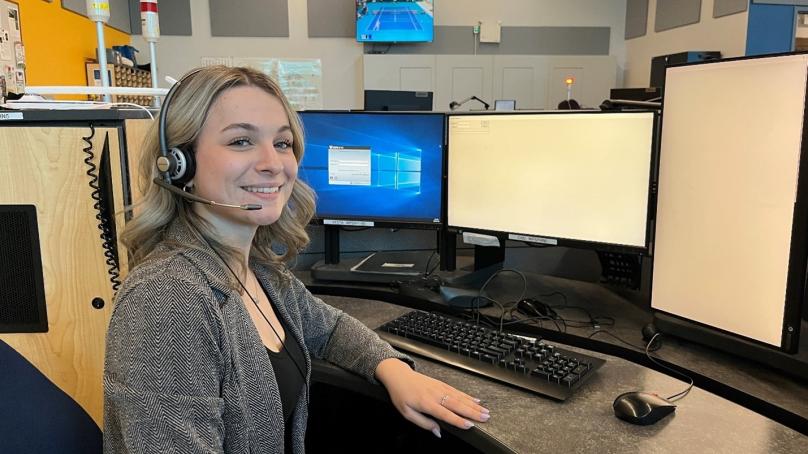
Shaylene
“Even what we might think are small things can feel really big to the person calling. You have to meet them where they are.”
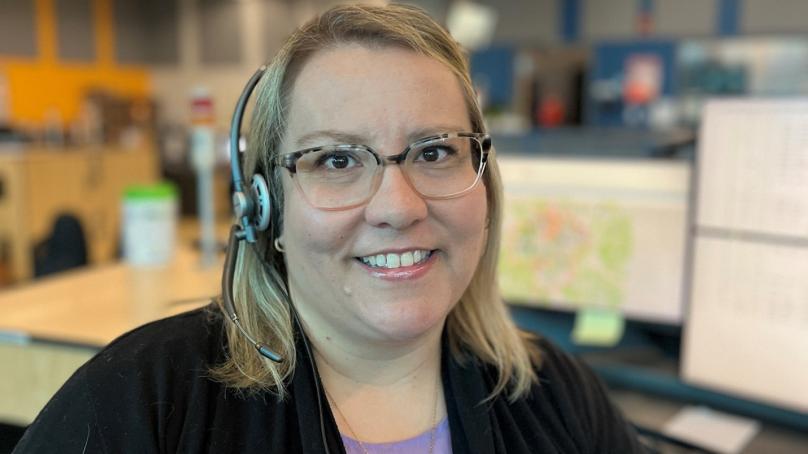
Jill
“It’s different when the emergency isn’t happening to you. You’re there to be the voice for someone else and that’s where you can really help.”
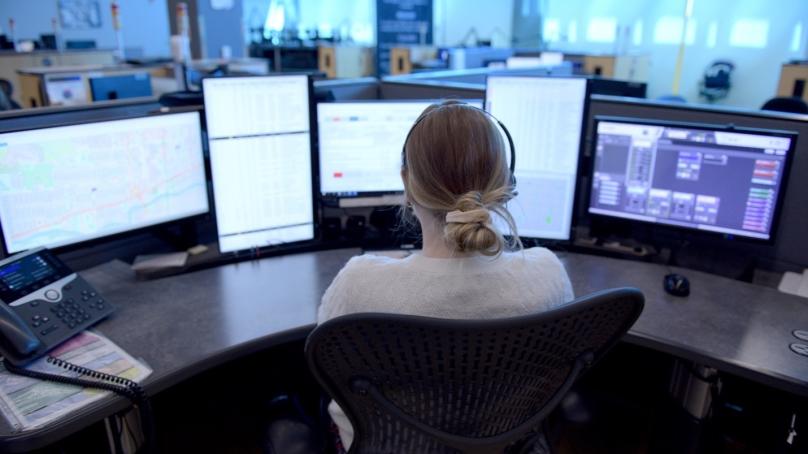
Brenda
“We’re people on the other end of the line, doing the best we can. Everything we do is about keeping the public and our officers safe.”
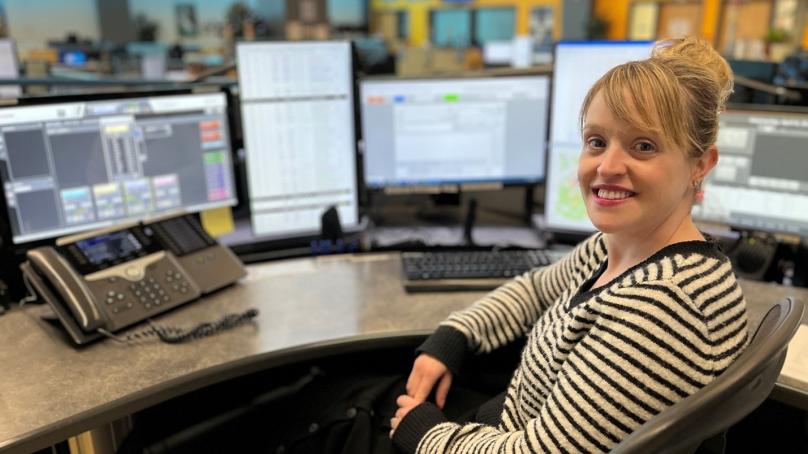
Natalie
You’re often dealing with people who are upset, frustrated, or scared,” she said. “Being able to stay calm, guide the conversation, and get the information you need … that’s everything.”
Kirby
“Do you genuinely want to help people? Because that’s what this job is. Every call is someone reaching out – and you’re there to answer.”
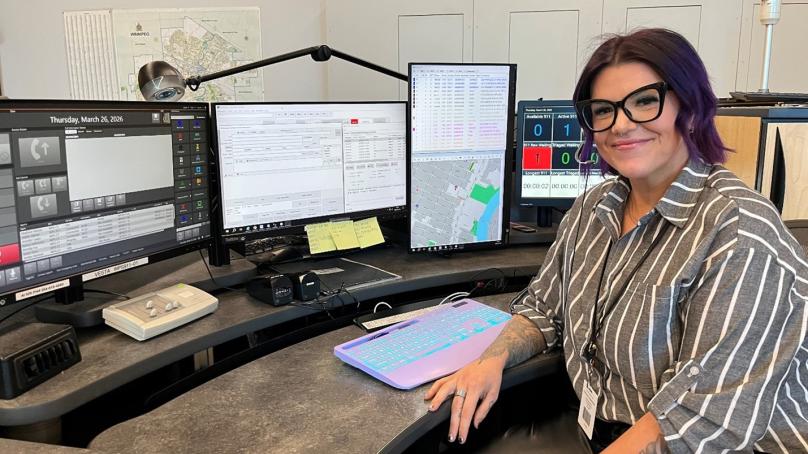
Shaylene didn’t originally see herself in the communications centre, but it didn’t take long to realize she was exactly where she belonged.
“I started as a cadet and thought I wanted to go into frontline policing,” she said. “But I quickly realized that wasn’t the right fit for me. I still wanted to help people and be part of the work. This was kind of my Plan B. Now I couldn’t be happier.”
About a year and a half into the role, Shaylene is a call taker in the Police Communications Centre, often the first voice someone hears in a moment of crisis.
“I triage calls – police, fire, paramedics – and make sure people get the help they need,” she said. “Even what we might think are small things can feel really big to the person calling. You have to meet them where they are.”
That ability to connect is what drives her.
“I like knowing that at the end of the day, I helped someone – maybe even changed someone’s day or their life for the better.”
While call takers aren’t physically on scene, Shaylene says their role is just as critical.
“You’re not there in person, but you’re guiding people through some of the hardest moments of their lives. If I stay calm, they stay calm. You can hear it in their voice. They start to come down, and they know they’re not alone.”
Some of the most meaningful calls stay with her.
“I’ve had people in crisis where I’ve stayed on the line until help arrived. Sometimes it’s just talking, keeping them grounded, letting them know someone is there. Those are the calls where you really feel like you made a difference.”
Before joining the service, Shaylene worked at a credit union, where strong customer service skills and a moment of being recognized for handling high-pressure calls gave her the confidence to apply.
“That’s when I thought, maybe I can actually do this.”
She says the job isn’t always easy.
“You need to be able to multitask, stay level-headed, and have a bit of tough skin. People are frustrated– they might take it out on you – but it’s not about you. It’s about what they’re going through.”
At the same time, support from her team has been constant.
“My shift, my supervisors; everyone is really supportive. You can ask questions, and no one makes you feel like you shouldn’t. You’re always learning.”
For anyone considering the role, Shaylene keeps it simple:
“If you want to help people and serve your community, this job gives you that opportunity every single day.”
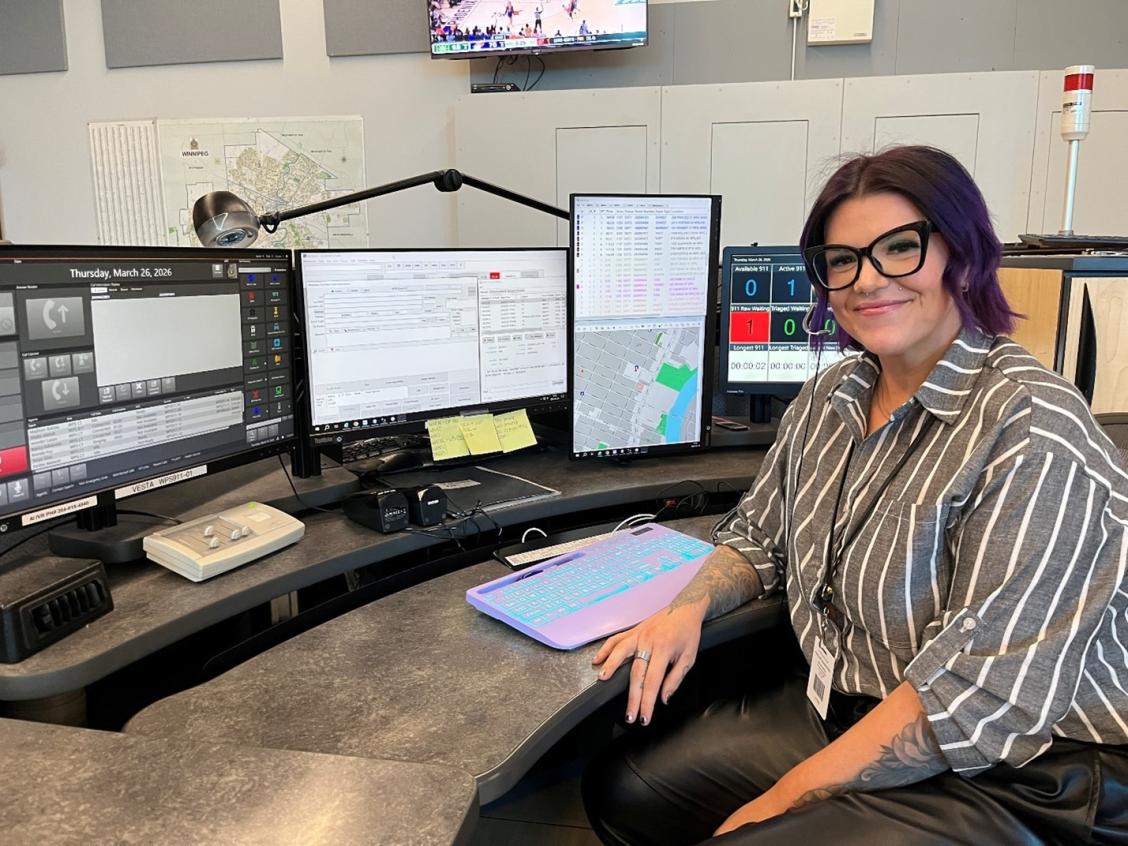
Kirby has spent most of her career using her voice, but in the communications centre, she’s learning the power of listening.
“I worked in radio for years, so I was used to doing the talking,” she said. “Now, it’s about really listening and that’s where you can make the biggest difference.”
Just three months into her role as a call taker with the Winnipeg Police Service, Kirby is still in training, working alongside a coach as she learns to navigate both 911 and non-emergency calls.
“At the start of each shift, we talk about goals – what I need to work on, what I can improve – and then we get on the phones,” she said. “You never know what the next call is going to be.”
That unpredictability is part of what drew her in.
“It can be anything from a simple question to someone in a crisis. You have to be ready for all of it.”
For Kirby, the role isn’t about being physically on scene. It’s about being present in a different way.
“You’re not there in person, but you can be the calm in the chaos,” she said. “Through your voice, your tone, and the information you provide, you’re helping someone through a moment that really matters.”
Her path to the communications centre wasn’t a straight line. Alongside her media career, Kirby spent more than a decade volunteering with Crime Stoppers. That experience that eventually led her to become Chair of Winnipeg Crime Stoppers and build strong connections within the policing community.
“I always knew I wanted to be part of this work in some way,” she said. “This role just fits my skill set.”
Now, early in her training, she’s already seeing what it takes to succeed.
“You have to be able to adapt quickly, stay focused, and really listen,” she said. “If you give people the chance to explain what’s going on and feel heard, you can help them in a much better way.”
The pace can shift quickly – from quiet moments to high-pressure calls – but support from her coaches and team has been key.
“We’re all going through it together,” she said. “You can ask questions, talk things through, and learn as you go. That support makes a big difference.”
For anyone considering the role, Kirby says it starts with a simple question:
“Do you genuinely want to help people? Because that’s what this job is. Every call is someone reaching out – and you’re there to answer.”
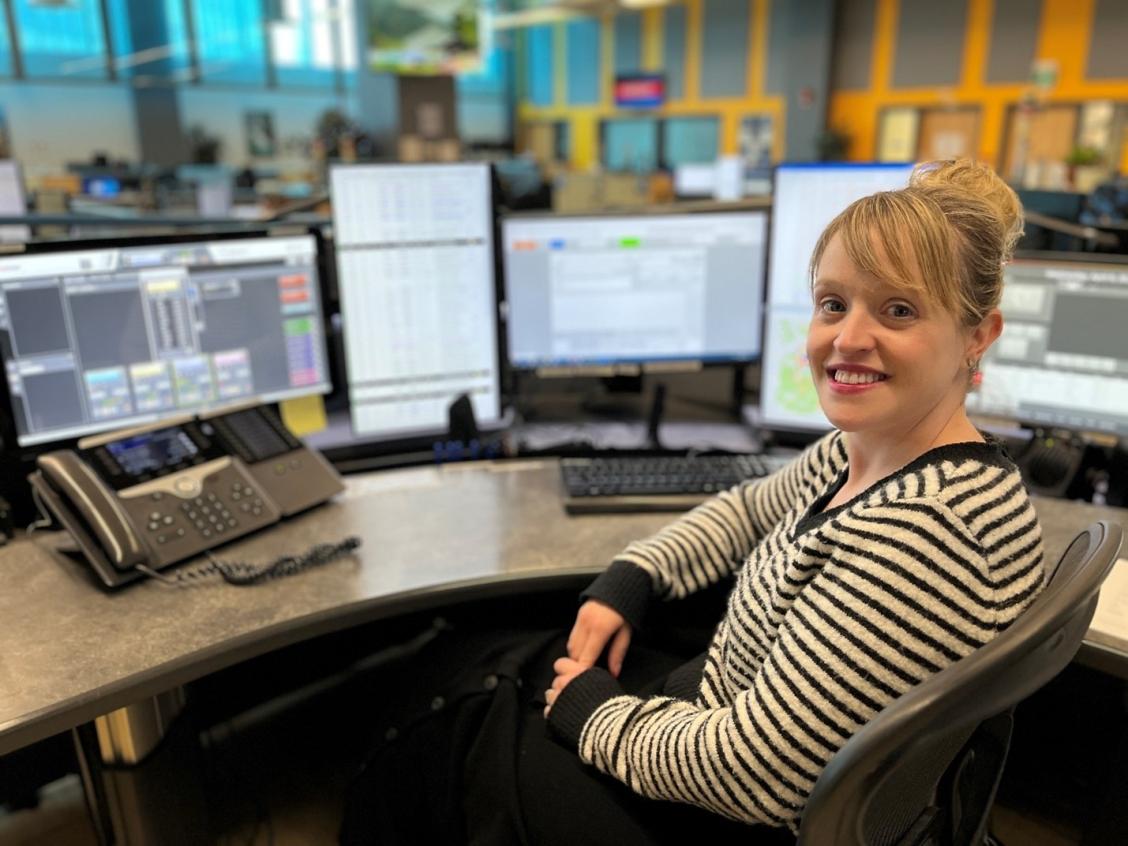
For Natalie, leadership in the communications centre isn’t just about managing calls. It’s about taking care of the people behind them.
A fourth-generation member connected to the Winnipeg Police Service, Natalie grew up with a strong understanding of policing. But, her path into the communications centre was shaped just as much by her own experience.
“I worked at a downtown bank before this,” she said. “You deal with people on some of their worst days, especially when it comes to financial stress. That customer service experience really prepared me for this role.”
Now in her 16th year with the service, Natalie serves as an Emergency Communications Primary Supervisor, overseeing a team of call takers and dispatchers during each shift.
“My team is amazing; they’re like family,” she said. “We spend a lot of time together, and we’ve been through a lot together. We check in on each other, we support each other. That’s what gets you through this job.”
That support is critical in a role that requires resilience, quick thinking, and the ability to de-escalate high-stress situations.
“You have to be able to compartmentalize,” she said. “What’s happening isn’t happening to you, but you’re the one helping make sure the right response gets there.”
Natalie says strong customer service skills are one of the most important qualities a call taker can bring to the role.
“You’re often dealing with people who are upset, frustrated, or scared,” she said. “Being able to stay calm, guide the conversation, and get the information you need … that’s everything.”
While the work can be intense, she believes the Communications Centre has evolved into a more supportive environment over time.
“We’ve lived the job and know what it takes,” she said. “There’s a real focus now on teamwork and making sure people feel supported.”
For Natalie, leadership means being present for her team in those moments.
“Sometimes it’s just checking in after a tough call, making sure someone is okay,” she said. “That goes a long way.”
Despite the demands of the role, she’s learned how to maintain balance.
“When I leave work, I leave work,” she said. “I spend time with my family, go for walks, just reset. That separation is important.”
For those considering a career in the communications centre, Natalie offers a candid perspective: “It’s not for everyone. But if you can stay calm under pressure, support your team, and focus on helping people, it can be incredibly rewarding.”
For her, it’s about more than the calls. It’s about the people answering them.
After more than three decades in the communications centre, Brenda has seen just about everything. For her, the work has always been about knowing she plays a role in keeping both officers and the public safe while working as part of a team to make that happen.
“I started with the City in 1987, just trying to get my foot in the door,” she said. “Within a few months, I was with the police, and eventually worked my way into the communications centre.”
Now nearly 35 years into the role, Brenda has worked her way through multiple positions, from clerk to dispatcher, building her experience step by step.
“At the time, you couldn’t just walk into the comm centre. It was something you worked toward,” she said. “You learned the job by doing it, and you kept learning every day.”
That constant learning, and the pace of the work, has been part of the appeal.
“The energy, the camaraderie, the adrenaline… it’s all part of it,” she said. “You’re working in a high-stress environment, but you’re doing it together.”
Over the years, Brenda has handled thousands of calls. Some routine. Some unforgettable.
“You don’t always remember your first call,” she said. “But you remember the moments where you realize you can do the job.”
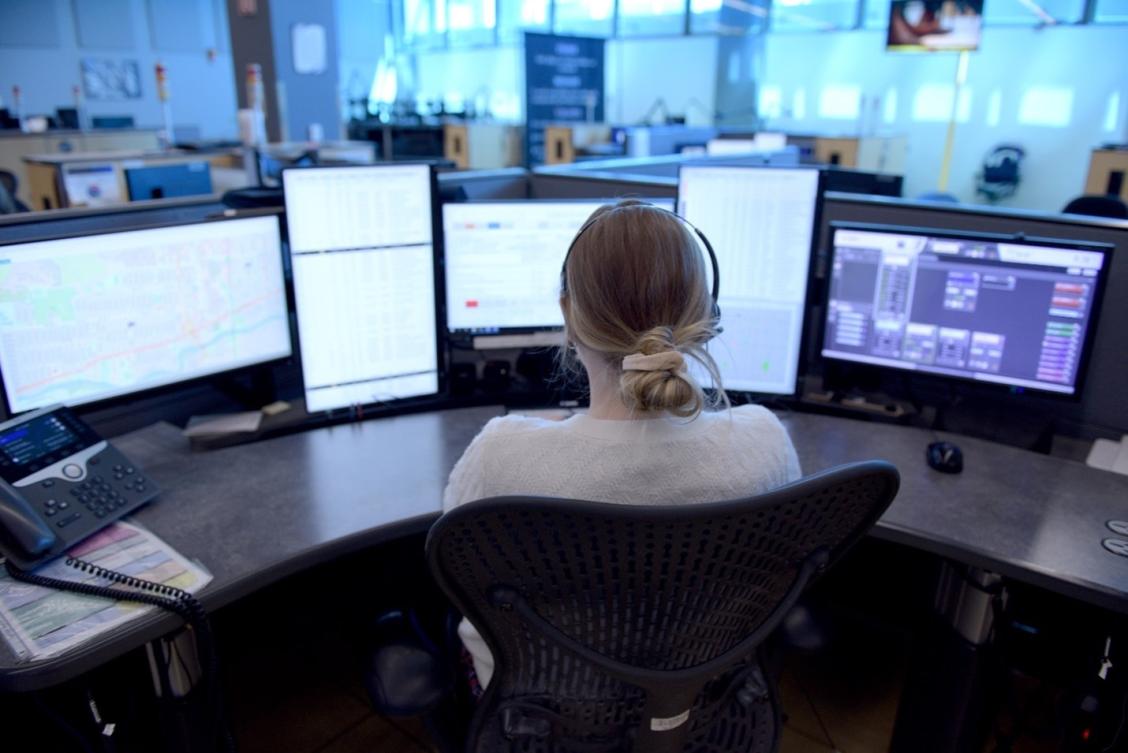
For her, one early call during training stood out, where she helped guide a caller to stay safe during a violent situation until officers arrived.
“That was the moment I thought, okay, I can do this.”
Brenda says the role takes a specific combination of skills.
“You have to be a good listener, empathetic, and able to take a lot of information and narrow it down quickly,” she said. “You need to be able to take direction, especially in high-pressure situations, and not take things personally.”
That includes how callers may respond in moments of stress.
“People are calling on some of the worst days of their lives. They might be frustrated or upset. You have to have thick skin, stay professional, and focus on getting the information needed to keep everyone safe.”
Strong technical skills are just as important.
“It’s not just answering the phone. You need solid computer skills and the ability to navigate multiple systems quickly,” she added. “That’s a big part of the job.”
Through it all, Brenda says the team environment plays an important role.
“We look out for each other,” she said. “You’re dealing with the same kinds of calls, the same pressures. There’s a lot of support, and a lot of respect for the work everyone does.”
After decades in the role, her perspective is simple:
“We’re people on the other end of the line, doing the best we can,” she said. “Everything we do is about keeping the public and our officers safe.”
For those considering the career, Brenda offers honest advice:
“You won’t know if it’s for you until you try it. But if you’re willing to learn, stay calm under pressure, and work as part of a team, it can be incredibly rewarding.”
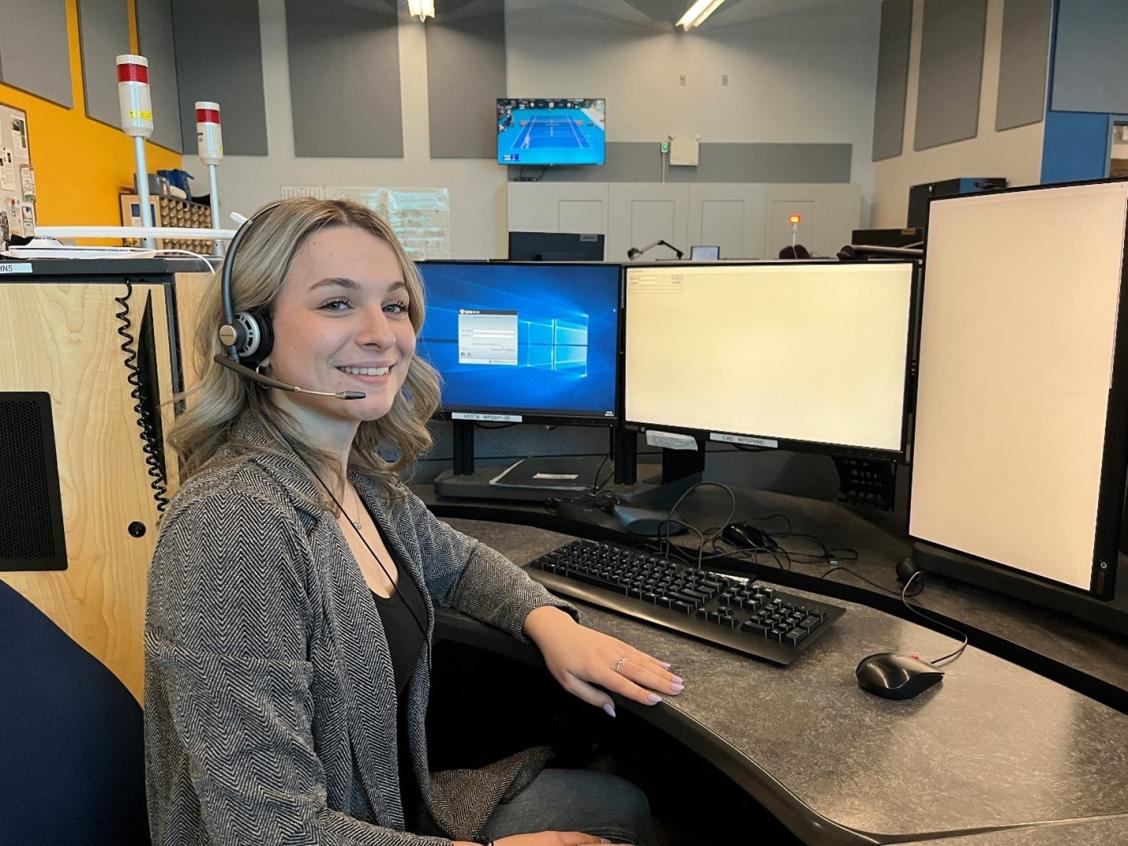
After two decades in healthcare, Jill was ready for something new, but she didn’t expect to find it in the communications centre.
“I saw a post online and thought, I feel like I could do that job,” she said. “I didn’t fully understand the process at the time, but I applied and I’ve never looked back.”
Now six years into her role as a call taker and dispatcher with the Winnipeg Police Service, Jill brings a calm, steady presence to every call—something shaped by years spent working in nursing homes and home care.
“In healthcare, you learn patience, communication, and how to meet people where they are,” she said. “Those skills translate directly into this job.”
From day one, Jill understood the unique challenge of the role.
“It’s different when the emergency isn’t happening to you,” she said. “You’re there to be the voice for someone else and that’s where you can really help.”
That ability to connect – especially in high-stress moments – is critical.
“People aren’t always able to process what you’re asking right away,” she said. “You have to adapt … reword things, slow it down, use their name … whatever it takes to help them focus and give you the information you need.”
Like many in the role, Jill says the learning curve is steep at first.
“When you’re in training, it’s not real. But once you’re on the floor, you realize you can’t predict what’s coming next,” she said. “You learn by doing and that’s when it starts to click.”
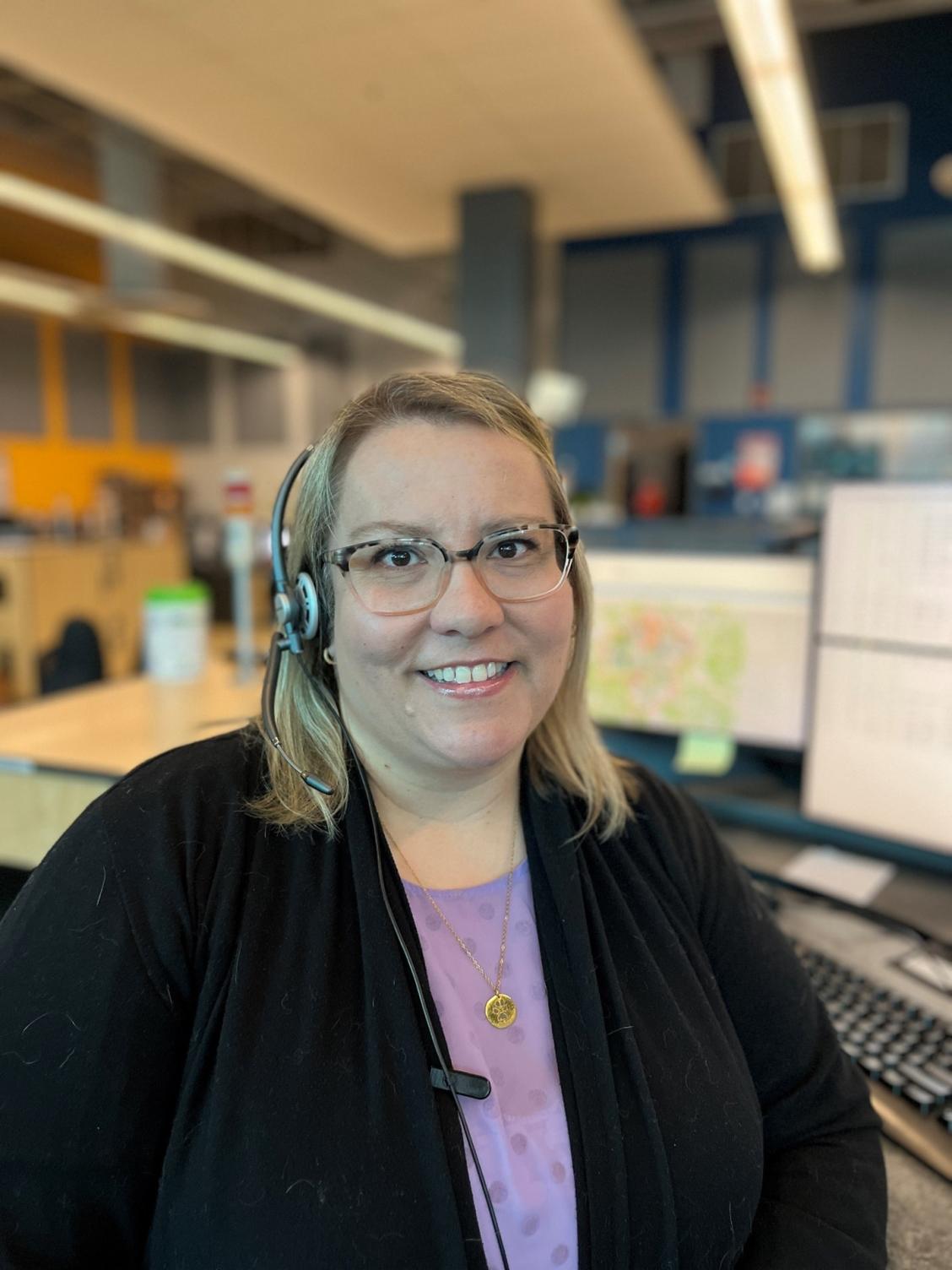
Today, she helps guide others through that same process as a coach.
“I really enjoy mentoring new call takers,” she said. “You’re often their first connection in the room, and you can have a big impact on how they grow and succeed.”
While the work can be demanding, Jill says support from colleagues and supervisors is always present.
“We check in on each other. Whether it’s your team, your supervisor, or behavioural health supports – you’re never on your own here.”
For Jill, maintaining balance outside of work is just as important.
“I spend time with my dog, get outside, stay active,” she said. “You have to find ways to reset and take care of yourself.”
Asked what she would say to someone considering the role, her advice is simple:
“If you think you can do it, try,” she said. “Go through the process. You might surprise yourself.”
For Jill, that leap of faith turned into a career she truly enjoys.
“I love my job,” she said. “It’s interesting, it’s meaningful, and there’s always room to grow.”