
With students returning to classrooms, Winnipeg streets are once again busier around schools as children walk, cycle, take the bus and are dropped off and picked up each day.
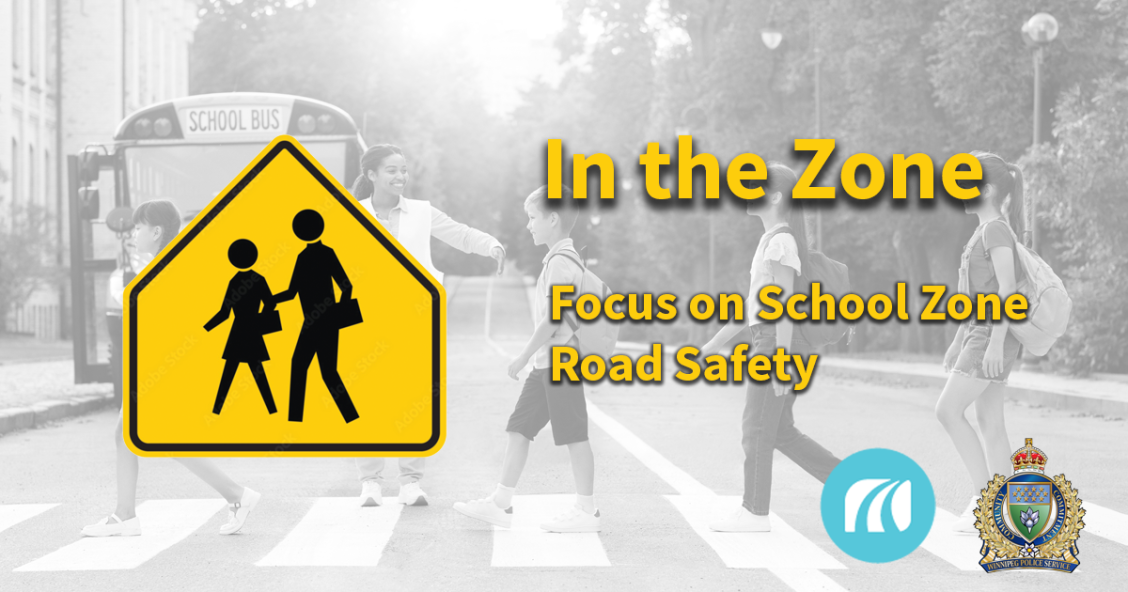
The Winnipeg Police Service Traffic Division is launching In the Zone, a back-to-school road safety campaign focused on simple choices that can help keep children safe.
Throughout the campaign, #WPSTraffic will share a series of messages encouraging motorists, parents, caregivers and students to slow down, stay focused and look out for one another around schools.
In Winnipeg, reduced-speed school zones are once again in effect. Where posted, the maximum speed is 30 km/h from 7 a.m. to 5:30 p.m., Monday to Friday, September through June.
But school-zone safety is about more than speed. We all have a role to play in road safety. Here are some tips for anyone travelling in Winnipeg school zones.
Just slow down
Morning routines can feel rushed. The school bell is about to ring, traffic is backed up and someone forgot their lunch.
None of that changes what matters once you’re behind the wheel.
Motorists are encouraged to give themselves extra time, put distractions away, watch carefully at crossings and intersections and be prepared for children to make unexpected movements.
Kids can be unpredictable.
Drivers shouldn’t be.
Park smart
The few minutes before and after the school bell can be some of the busiest times around schools, and where motorists choose to stop can have a significant impact on safety.
Drivers should:
- use designated loading and drop-off areas;
- keep intersections and crosswalks clear;
- follow posted parking and stopping restrictions;
- have children exit on the sidewalk side when possible; and
- consider parking a little farther away and walking the final block.
Double parking or stopping where a vehicle blocks sightlines can make it difficult for children to see approaching traffic, and for drivers to see them.
Don’t let being late become someone else’s safety risk.
Watch for pedestrians
For thousands of Winnipeg students, getting to school starts on foot.
Drivers should expect more children around sidewalks, intersections and pedestrian crossings, particularly before and after school.
Parents and caregivers can also help children establish safe habits by encouraging them to use marked crossings, put devices away when crossing the roadway and make sure drivers see them before stepping into traffic.
As daylight hours become shorter, bright or reflective clothing can also help children be seen.
Motorists are also reminded to stop when a school patrol or crossing guard enters the roadway and remain stopped until the patroller and pedestrians have safely cleared the crossing.
Think school bus safety
School buses are back on Winnipeg streets, which means children may be crossing the roadway as they get on and off.
When a school bus has its red warning lights flashing and stop arm activated, motorists approaching from the front or rear must stop at least five metres away and remain stopped until the warning equipment is turned off.
The exception is traffic travelling on the opposite roadway of a physically divided roadway.
Giving buses enough room means giving children a safer place to get on and off.
See the lights. Make the stop.
Share the road
Not every student arrives at school in a vehicle.
Drivers should expect more children cycling, walking and rolling through neighbourhoods and around schools.
Motorists can help by checking carefully before turning, watching for cyclists before opening vehicle doors, giving vulnerable road users space and slowing down near schools and crossings.
Parents and caregivers can help young cyclists by reinforcing helmet use, predictable riding and reviewing the route to school before children travel it on their own.
However we travel, we are sharing the same streets.
Look twice. Leave space.
It’s about time
One of the easiest ways to make the school run safer doesn’t require a new law, sign or piece of equipment.
Leave five minutes earlier.
A little extra time can mean less rushing, fewer risky turns or stops, more patience around pedestrians and cyclists and more time to react when something unexpected happens.
The morning may still be chaotic.
Your driving doesn’t have to be.
We all have a role to play
School road safety isn’t one person’s responsibility.
It’s the driver who slows down.
The parent or caregiver who chooses a safe place to stop.
The child who uses the crossing.
The cyclist who stays visible.
The school patrol or crossing guard helping students across.
The school bus driver watching the road.
And the rest of us paying attention.
Education, enforcement, safer streets and responsible choices all have a role to play.
Throughout September, members of the Traffic Division and School Engagement Section will continue sharing road-safety information and encouraging Winnipeg road users to make safe choices around schools.
Slow down. Look out for one another. Stay In the Zone.